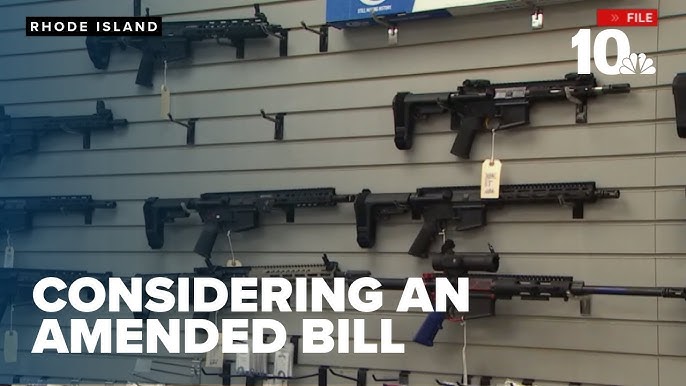

Analysis of Rhode Island’s Amended Assault Weapon Bill
The recent decision by the Rhode Island Senate Judiciary Committee to advance an amended assault weapon bill has ignited debate among both gun-rights advocates and supporters of stricter gun laws. At its core, the legislation, which limits the sale (but not use or possession) of so-called “assault weapons,” represents an attempt to take a measured step toward addressing safety concerns while also acknowledging the enduring emphasis on Second Amendment rights. This opinion editorial takes a closer look at the key twists and turns of this legislative battle, the decisions made behind closed doors, and their potential impact on communities in Rhode Island.
While supporters argue that the bill zeroes in on only the most lethal versions of firearms—such as AR-15s and AK-47s—the amendments continue to generate heated discussions over whether this represents meaningful progress or simply a watered-down compromise. Throughout this analysis, we will poke around the finer details of the bill, break down the positions of its varied supporters, and examine the broader implications of the amendment process on the gun rights debate.
Rhode Island Assault Weapon Legislation Analysis: Understanding the Bill's Key Elements
The amended bill, originally sponsored by Sen. Louis DiPalma (D-Middletown), restricts the sale of certain firearms defined as “assault weapons.” Notably, the legislation leaves intact the rights of individuals who already own these weapons, as well as their legal use and possession. For many, this provides some reassurance that the enactment of stricter controls will not entirely strip responsible citizens of their right to self-defense, while others feel it undermines the spirit of comprehensive gun control reform.
Key elements of the bill include:
- Limiting restrictions to the sale of firearms characterized as assault weapons.
- Defining which weapons fall under this category, focusing on models with features such as detachable magazines versus fixed magazines.
- A compromise clause suggesting that if certain firearms come with fixed magazines, they may still be acquired, under the argument that fixed magazines delay rapid-fire loading.
- An elimination of the voluntary statement of ownership that critics have likened to de facto gun registration.
This breakdown illustrates some of the hidden complexities in the legislative process. While on the surface, many recognize the bill as an attempt to make real progress in enhancing public safety, the bill’s structure leaves plenty of room for debate about whether it sufficiently confronts the underlying tangled issues posed by gun violence in an increasingly tense political environment.
Impact on Second Amendment Rights in Rhode Island
The heart of the controversy lies in the contrasting interpretations of Second Amendment rights. On one hand, gun-rights supporters argue that any form of firearms ban infringes on the constitutional right to bear arms. Leaders in this camp have been especially vocal, emphasizing that laws banning sales—even if they do not affect use or possession—undermine the ability of law-abiding citizens to secure their safety and uphold their constitutional freedoms.
For instance, state Sen. Leonidas Raptakis expressed disdain for what he called an infringement on the rights of Rhode Islanders. According to Raptakis, the bill does not do enough to protect the right to self-defense, suggesting that if law-abiding citizens can’t buy certain weapons next year, overall public safety might be compromised. Such positions highlight the delicate balance legislators must strike between enhancing public safety and respecting individual freedoms.
On the flip side, advocacy groups arguing for enhanced gun safety have maintained that narrowing the availability of the deadliest firearms is a key step in reducing gun-related tragedies. They point out that targeting the sale of specific models recognized for their potential lethality does not affect those who have already acquired them but could prevent future escalations in violent confrontations. This perspective insists that the trade-off—between an incremental restriction on certain weapons and potential reductions in severe firearm incidents—is well worth the compromise.
Compromise or Concession? The Committee's Strategy Revisited
One of the most compelling aspects of this debate centers on the concept of compromise. The amended version of the bill is seen by some as a cautious, incremental approach to a very overwhelming issue. Legislative insiders like Judiciary Chairman Matthew LaMountain have stressed that real progress involves taking gradual steps rather than attempting sweeping reforms overnight. From this viewpoint, the changes made in the committee represent a necessary, if imperfect, advancement that could pave the way for more ambitious measures in the future.
However, not every public safety advocate is on board with this approach. Critics believe that the amendment suffers from diluting the originally proposed measures. Proponents from groups like the Rhode Island Coalition Against Gun Violence have expressed disappointment that the version passed by the Judiciary Committee seems less stringent than alternative proposals. They argue that by narrowing the criteria to only a few types of assault weapons, the bill may ultimately fail to address the wider, more intimidating issues that plague gun violence in communities across the state.
The committee’s decision to allow firearms with fixed magazines to remain accessible highlights the challenges lawmakers face when trying to navigate the little details inherent to gun legislation. It reflects an ongoing effort to find a path that both satisfies moderate reform advocates and appeases those warning about potential infringements on constitutional rights.
Legislative Dynamics: Balancing Political Pressure and Public Opinion
The legislative process in Rhode Island—as in many states—sometimes mirrors the larger national debate over gun control and individual rights. Political navigation in such a charged environment is hardly straightforward. Senate President Val Lawson and Majority Leader Frank Ciccone, for example, both cast their ex officio votes in favor of the bill, an act which, while procedural, signals their support for the incremental changes offered by the amended legislation.
Meanwhile, the divided opinions among legislators, including dissent from Senate Minority Leader Jessica de la Cruz and Senate Minority Whip Gordon Rogers, reveal the tense political divide. Some legislators, despite their party alignment, have used their votes as a means to signal their broader concerns regarding constitutional freedoms, even when they recognize the pressing need for reform.
This political balancing act illustrates the challenging parts of drafting legislation amid a highly polarized atmosphere. Lawmakers must find a way to steer through conflicting pressures—from the politically charged arguments of gun-rights activists to those of gun-safety advocates—all while maintaining public safety at the forefront of their decision-making. The outcome of these debates will likely set the stage for how future gun control policies are developed and implemented in Rhode Island.
Local Perspectives on Gun Safety and Self-Defense
The community reaction to the amended assault weapon bill reflects a broader national conversation about gun safety versus self-defense. Local residents, civic leaders, and advocacy groups are intensely invested in discussions that blend constitutional liberties with the quest for enhanced public safety. In a state where gun culture runs deep, perceptions are often split along traditional lines where personal safety—and the right to protect oneself—clashes with the need to reduce access to weapons associated with lethal violence.
From public forums to local social media discussions, one finds varied opinions. Some citizens argue that restricting the sales of particular weapons can mitigate the chance of mass shootings and other catastrophic events. They cite other regions that have witnessed benefits following tighter gun controls as evidence that even a small change can have positive effects on community safety.
In contrast, a significant segment of the population, often represented by groups dressed in their identifiable yellow T-shirts, sees any limitation as regressive. They maintain that even a minor restriction on sales could inadvertently hamper the ability of law-abiding citizens to arm themselves for self-defense. This debate is emblematic of the ongoing clash between the desire for stricter regulation and the fiercely protected right to bear arms.
Policy Implications: Are Incremental Steps Sufficient?
At the heart of policy analysis on this bill is the question: can incremental legislative steps effectively address the tangled issues associated with gun violence? Many policy experts argue that significant change rarely occurs overnight. Rather, measured, incremental progress is often more sustainable in the long run. The amended assault weapon bill, in its current form, can be seen as a compromise that attempts to reconcile the minor twists and turns of public safety needs with the steadfast beliefs surrounding self-defense rights.
When considering the policy implications, several factors come into play:
| Factor | Implication |
|---|---|
| Public Safety | Limiting sales of high-risk weapons could reduce instances of mass shooting incidents and severe gun violence. |
| Second Amendment Rights | Maintaining the right to use and possess firearms for self-defense remains intact, preserving a critical constitutional right for many citizens. |
| Legislative Precedent | This bill sets a moderate standard that may influence future gun control measures in Rhode Island and beyond. |
| Political Consensus | The compromises made in the bill highlight the delicate balance required for bipartisan support in a deeply divided issue. |
Critics, however, worry that such incremental measures might be too weak to produce measurable improvements. They contend that without bold and comprehensive action, the root causes of gun violence may continue to fester. In an era of constant and sometimes nerve-racking uncertainty, the effectiveness of small, piecemeal policy changes remains a subject of intense debate.
Community Reactions: Voices from the Statehouse and Beyond
The atmosphere surrounding the passage of this amended bill is one of high emotion and measured urgency. At public gatherings, protesters from both sides of the debate have made their presence known. Gun-rights supporters, for instance, have gathered at the Statehouse not just to register their opposition, but to remind legislators that any perceived step toward restriction is viewed as an infringement upon their most cherished rights.
In contrast, gun-safety advocates emphasize that the amended bill represents a positive, though cautious, step forward amidst a climate where gun violence is a constant, overwhelming worry. Local discussions have become a microcosm of the national debate, highlighting how personal experiences, local history, and cultural values shape the way gun laws are perceived and implemented.
Key points raised by community members include:
- The symbolism of the yellow T-shirts worn by many gun-rights supporters, which underscore their personal connection to the issue.
- Expressions of concern from families and local civic organizations who feel that stricter legislation might save lives.
- Calls by legal experts for further debate and more refined measures that address both the confusing bits and subtle, underlying issues in current legislation.
Such varied responses make it clear that any discussion of gun policy cannot be limited to statistics or abstract legal principles; it is inherently intertwined with human emotions, experiences, and the local social fabric.
Comparing Legislative Approaches: Gun Safety vs. Constitutional Rights
In reviewing the competing legislative philosophies, it is essential to compare the priorities of gun-safety advocates with those who stress the importance of protecting constitutional rights. On one side, proponents of stricter gun measures argue that the more restrictive the sales and ownership of high-capacity weapons, the safer the community can become. They emphasize that controlling the sale of the most dangerous firearms is a practical step toward reducing intentional and accidental violence.
On the other hand, advocates for gun rights maintain that even minor restrictions undercut their ability to properly defend themselves. They insist that the right to purchase and own firearms is a fundamental freedom that must not be compromised in efforts to improve public safety. This perspective is bolstered by the argument that a well-prepared citizenry capable of self-defense contributes to overall community safety.
When comparing these legislative approaches, several insights emerge:
- Incremental vs. Comprehensive Reform: The amended bill represents an incremental reform, whereas many activists on both sides of the debate call for a more comprehensive overhaul of current gun laws.
- Symbolism vs. Substance: The debate often hinges on symbolism—the idea that even a small restriction could set a dangerous precedent—versus the practical substance of achieving measurable improvements in public safety.
- Practical Considerations: The inclusion of provisions, such as exemptions for firearms with fixed magazines, reflects an effort to strike a balance between reducing risk and maintaining functionality for self-defense.
Both camps agree, more or less, on the need to address gun violence; however, the methods for doing so remain a point of sharp contention. Rather than finding a clear path forward, the state appears to be locked into a cycle of compromise and concession, with each incremental step prompting further calls for reform from one side and caution from the other.
Long-Term Prospects: The Future of Gun Legislation in Rhode Island
Looking ahead, the trajectory of gun legislation in Rhode Island hinges on both the immediate outcomes of the Senate floor vote and the broader national mood regarding gun control. With the bill now slated to move to the floor on what is expected to be the final day of session, opponents are already considering potential amendments that could reshape its contours. The future of this legislative effort may very well depend on whether lawmakers can find common ground amid these conflicting viewpoints.
For many, the current legislative process offers a glimpse into how complex and intimidating the debate over firearms regulations has become. The delicate balancing act required to craft legislation that is both acceptable to a broad array of political constituencies and effective in reducing gun violence is, undeniably, a nerve-racking challenge for lawmakers.
Some key considerations for the future include:
- Potential Amendments: As the bill moves to the full Senate, there is room for further modifications. These could either narrow its impact or expand its reach, depending on the negotiation skills of the lawmakers involved.
- Political Will: With 24 out of 38 senators reportedly on board for a more rigid stance on gun control, the political climate may shift toward a stricter regime if public opinion sways under the pressure of high-profile incidents or emerging trends.
- Community Influence: Grassroots movements and local advocacy will likely continue to play a significant role. The voices from community meetings, town halls, and even local news debates may eventually tip the scale in one direction or the other.
- Interstate Comparisons: Observing how other states implement similar measures could provide lawmakers with useful insights, steering their decisions as they figure a path forward in an already over-complicated landscape.
In essence, while the current bill represents a step forward in the quest to reconcile various demands on public safety and constitutional rights, it simultaneously opens up many questions regarding the long-term effectiveness and fairness of incremental gun control measures in an ever-changing political landscape.
Understanding the Minute Details: Fixed Magazines, Voting Patterns, and Procedural Nuances
One of the more subtle, yet super important, pieces of this legislative saga is the procedural context surrounding the bill’s passage. The decision to allow firearms equipped with fixed magazines—even while banning certain models otherwise—reflects a calculated effort to mitigate the impact on self-defense while still symbolizing a commitment to reform.
Let’s break down a few critical points that might otherwise seem hidden in the bureaucratic fine print:
- Fixed Magazine Provision: The allowance for weapons with fixed magazines is seen by lawmakers as a safeguard. It ensures that citizens who use such firearms strictly for self-defense are not unduly penalized, even as the law seeks to limit the most aggressive variants of assault weapons.
- Voting Dynamics: With ex officio votes cast by leaders like Senate President Val Lawson and Majority Leader Frank Ciccone, the modified bill was buoyed by political power plays that are not often visible to the public. Understanding these voting patterns is essential to grasping the legislative culture in Rhode Island.
- Elimination of Voluntary Registration: Critics have long argued that having a voluntary statement of ownership functioned as a de facto registration system. Its removal marks one of the key concessions to those worried about government overreach.
Each of these points underscores the fact that, while some aspects of the legislation appear straightforward at first glance, the underlying twists and turns reveal a smaller battle being fought over symbolic gestures versus substantive change. As the debate gathers momentum, these subtle details will likely be scrutinized in both legal circles and the court of public opinion.
Legislative Strategy: Can Incrementalism Bridge a Deep Political Divide?
For too long, the debate over gun control has been viewed through a black-and-white lens. However, the current legislative approach in Rhode Island demonstrates that more moderate, incremental adjustments may be the only feasible way to steer through a political landscape loaded with both passionate support and intense opposition.
Legislators involved in this process seem well aware of the daunting challenges they face. Senate Chairman LaMountain, for instance, likened the amendment to a necessary compromise—one that might not satisfy every faction but at least moves the needle on public safety concerns. This method of taking gradual measures also reflects a broader trend in governance: when faced with overly complicated policy issues, sometimes the safest route is to chip away at the problem slowly, rather than attempting a sweeping overhaul that might backfire politically.
Key features of this legislative approach include:
- Step-by-Step Reform: Rather than aiming for a complete ban or unregulated market, the current process is designed to gradually alter the legal framework—a strategy that may ultimately win broader acceptance.
- Political Mediation: The vote in the Judiciary Committee, split along narrow margins, highlights the need for ongoing dialogue and negotiation, suggesting that future bills will likely continue to be murky in their details.
- Strategic Voting: The use of ex officio votes by leaders reflects not just a support for the policy itself but also a strategic endorsement of incrementalism as a method of solving tangled issues.
Ultimately, the question remains: will incrementalism bridge the deep political divide that often renders gun control debates so overwhelming? If lawmakers can continue to find common ground, even a small piece of progress might pave the way for more comprehensive measures later on. For now, the amended assault weapon bill stands as a testament to both the promise and frustration inherent in such a conflicted policy arena.
Evaluating the Short-Term Effects Versus Long-Term Outcomes
The assay of any significant piece of legislation should include a thoughtful examination of both short-term and long-term impacts. In the case of the amended assault weapon bill, many concerns linger about whether this patchwork approach will yield measurable gains in public safety or simply serve as a symbolic victory for one side of the debate.
In the short term, the immediate effect of the bill might be a somewhat reduced accessibility of certain high-capacity firearms. The hope among supporters is that this reduction will correlate with fewer incidents involving these particularly dangerous models, a theory supported by analogous measures in other jurisdictions. At the same time, opponents warn that slight adjustments may simply lead to workarounds or even a shift in the black market, leaving the underlying issues of gun violence on edge.
When looking at the long-term outcomes, several considerations merit attention:
- Behavioral Shifts: If the law successfully curtails the acquisition of specific assault weapons, it could gradually alter public behavior and influence the overall patterns of firearm use.
- Judicial Challenges: Any law that touches upon constitutional rights is likely to face legal scrutiny. How courts interpret and enforce the provisions will be crucial in determining whether the bill can withstand future legal challenges.
- Policy Precedent: Rhode Island’s experience with this amended bill could serve as a blueprint—both positive and negative—for future gun legislation at the state and national levels. By watching how the policy evolves over time, lawmakers and the public will be better equipped to judge its true worth.
Balancing these short-term effects with the anticipated long-term outcomes is a tricky part of public policy evaluation. As debates heat up and more data becomes available, the hope is that a nuanced understanding will emerge—one that considers the fine points of both legislative intent and practical reality.
Charting a Forward Path: What Should Rhode Island Expect in the Coming Years?
Looking forward, Rhode Island stands at a crossroads. On one side is the promise of gradually improved safety standards, and on the other, the potential risk of aggravating tensions among those who view even minor restrictions as a threat to their core freedoms. Over the next few years, the paths taken by both legislators and advocacy groups will be telling.
Several factors will shape the road ahead:
- Legislative Momentum: With a larger number of senators reportedly in favor of a stricter approach, there is cautious optimism that further tightening of restrictions could be on the horizon, particularly if public opinion shifts in favor of more robust measures.
- Public Discourse: Continued media attention and community engagement will play critical roles. Town halls, public forums, and local news coverage are all expected to influence the narrative and sway moderate opinions.
- Judicial Oversight: As mentioned earlier, any sweeping changes related to firearms regulation may face legal challenges. The outcomes of these challenges will inform not only future policy but also public trust in the legislative process.
- Technological Innovations: Advances in firearm technology and security measures could also impact how future laws are drafted. Legislators might soon have to grapple with new categories of weapons and revised definitions, adding another layer to the already over-complicated issue.
Ultimately, Rhode Island’s experience with the amended assault weapon bill is far from a closed chapter. Instead, it marks the beginning of an extended policy dialogue, one where every adjustment—no matter how small—has the potential to significantly influence both the legal landscape and societal norms.
Conclusion: Weighing the Trade-Offs in a Tense Political Climate
The debate over Rhode Island’s amended assault weapon bill encapsulates many of the delicate twists and turns characteristic of public policy debates on gun control. While the bill aims to strike a balance by restricting the sale of the most dangerous versions of firearms while preserving fundamental rights, it also spotlights the enduring tensions between gun-safety advocates and supporters of the Second Amendment.
This decision by the Senate Judiciary Committee demonstrates how legislative compromise can simultaneously be viewed as progress by some and an unacceptable concession by others. Whether this cumulative approach will lead to truly safer communities or merely add another layer to the increasingly tangled issues of gun legislation remains to be seen.
In the near future, as lawmakers prepare to bring the bill to the Senate floor and as community voices continue to echo through town halls and social media alike, Rhode Island will be closely watched as a microcosm of the national gun debate. Both supporters and detractors of the current process must now grapple with the reality that change—however incremental—will come with both benefits and costs.
In these nerve-racking times, the ongoing effort to find a compromise that respects both public safety concerns and the essential right to self-defense underscores the immense challenges of policy-making in a deeply divided society. Whether Rhode Island’s approach to gun legislation will serve as a model for other states or a cautionary tale of compromise is a matter best decided in time, as each new vote, amendment, and judicial interpretation adds further layers to this unfolding drama.
In essence, while the amended assault weapon bill may not resolve all of the state’s hidden complexities or ease every community worry, it does represent a tentative step toward addressing some of the most pressing, yet tricky, parts of the gun debate. With layered approaches and cautious incrementalism, Rhode Island stands on the precipice of potential reform—one that will require continual adjustments as the state and its citizens work through the tangled issues of public safety, constitutional rights, and effective governance.
Originally Post From https://thepublicsradio.org/politics/amended-assault-weapon-bill-advances-to-ri-senate-amid-criticism/
Read more about this topic at
Congress Passes Bipartisan Gun Legislation, Clearing It …
GUN OWNERS, GUN LEGISLATION, AND COMPROMISE