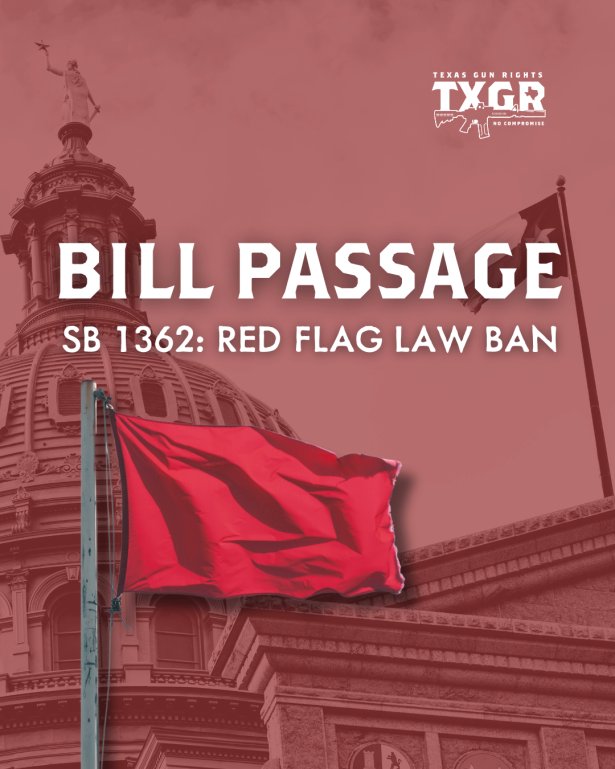
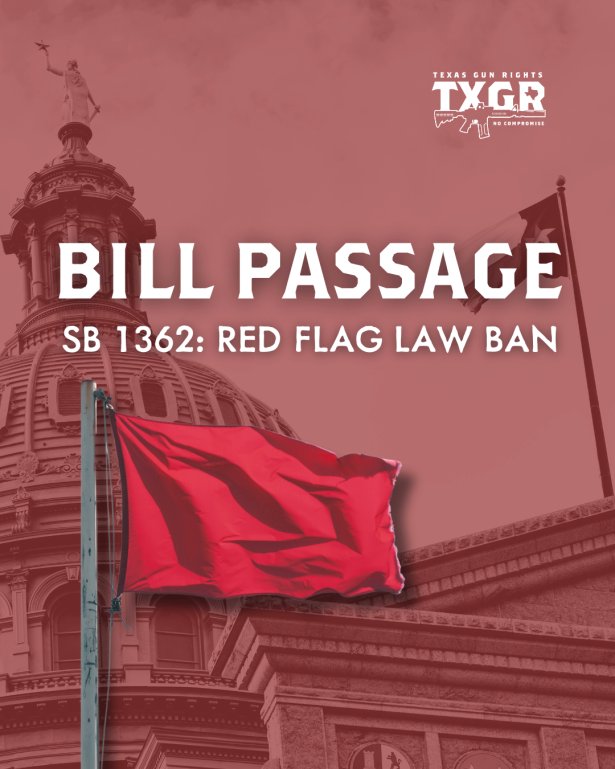
Texas Legislative Changes and Their Impact on Red Flag Laws
In recent weeks, Texas lawmakers made a series of sweeping decisions that have drawn considerable attention from both gun rights advocates and their critics. The state’s legislature not only banned red flag laws—measures that allow courts to temporarily remove firearms from individuals deemed potentially dangerous—but also relaxed restrictions on owning certain types of short-barrel firearms. This opinion editorial takes a closer look at these new laws, examines their potential impact, and considers the broader implications for legal frameworks and public safety in Texas.
The debate surrounding firearms regulation in Texas is full of problems, with the issues proving to be as tangled as they are politically charged. Those in favor of loosening gun-control measures argue that the changes provide essential protection for individual rights, while opponents contend that the lack of red flag laws could lead to dangerous situations, especially when individuals are in a state of crisis. In this editorial, we will get into the fine points of this debate, dig into the historical background, and explore what these legislative changes might mean for the future of gun regulation in the Lone Star State.
Understanding the New Legislative Measures
The recently passed legislation represents a major shift in Texas’s approach to firearms regulation. One of the most significant changes is the ban on red flag laws. Typically, red flag laws allow court authorities to remove guns temporarily from someone deemed at risk of harming themselves or others, based on evidence presented in a legal setting. By prohibiting these laws, Texas lawmakers have effectively taken a stand against what they view as government overreach into personal liberties.
At the same time, the state has loosened its grip on the regulation of short-barrel firearms, including sawed-off shotguns. This decision is seen as a measured effort to support enthusiasts and the gun-owning community, who argue that such legislation often becomes entangled in tricky parts and confusing bits that eventually infringe on Second Amendment rights. Texas officials contend that the law has been crafted to protect both individual freedoms and the rights guaranteed by the state constitution.
Historical Context and Political Backdrop
Looking back at the history of gun laws in Texas, one finds that the state has always been at the center of the national debate on firearms regulation. Texas’s reputation as a staunch defender of gun rights has its roots in both its independent political culture and its history of individualism. Over the years, multiple legislative sessions have seen various proposals that either tighten or loosen restrictions on gun ownership. The current session, however, marks a notable pivot away from measures that are seen as overly intrusive, such as red flag laws.
Politically, the decision has galvanized supporters of gun rights, who see these changes as a reaffirmation of what they describe as a long-held tradition of self-reliance and resistance to federal oversight. Critics, however, worry that eliminating red flag laws may leave communities without a critical tool for preventing tragedy among those who are temporarily overwhelmed or facing nerve-racking personal crises.
Legal and Constitutional Considerations
From a legal standpoint, the debate over firearm regulations is loaded with issues. At its core, the question hinges on the balance between public safety and individual rights—a tension that has been present since the drafting of the United States Constitution. Texas lawmakers argue that this new legislation preserves the essential rights of gun owners while adhering to the state’s constitutional guarantees.
However, the banning of red flag laws raises serious questions about the role of government in intervening in situations where an individual might be a danger to themselves or others. Those who support red flag measures believe that such laws provide a necessary safety net by allowing early intervention in cases where warning signs are present, even if those signals may be subtle or complex. In contrast, those opposed argue that the very act of removing someone’s firearms based on subjective assessments can be both intimidating and prone to mistakes.
Some legal experts warn that the differences between individual liberty and communal security represent one of the more complicated pieces of this debate. In analyzing the red flag law ban, it is important to consider not only the letter of the law but also the broader societal implications. The question of how to figure a path forward in balancing rights with responsibilities is indeed a formidable challenge that remains unresolved at both state and national levels.
Potential Implications for Public Safety
One of the primary concerns voiced by opponents of the new legislative changes is the potential risk to public safety. Red flag laws are often seen as a preventive measure, offering a legal mechanism for intervening before a crisis escalates. Critics of the ban argue that without such laws, there exists a dangerous gap in the state’s ability to take timely action when someone’s behavior or mental state signals that they might be at risk of harming others or themselves.
Without a red flag law in place, cases that might have been mitigated via early intervention could instead spiral into more severe incidents. This is particularly concerning in environments where family members, friends, or community members feel powerless to act in the face of overwhelming or off-putting warning signs. The relaxed restrictions on certain firearms add another layer of complexity to this issue, as they raise concerns about the ease with which individuals can access potentially lethal weapons.
- The absence of red flag laws may result in delayed intervention in crisis situations.
- Critics warn that the removal of such an important safety measure could lead to more frequent incidents of violence.
- Supporters argue that providing legal clarity on firearm ownership can bolster responsible use.
It is essential to bear in mind that the relationship between firearms, legislation, and public safety is riddled with tension. In the process of trying to protect constitutional rights, any legislative changes may inadvertently affect community well-being. As communities continue to experience both the benefits and the risks associated with gun ownership, the need to figure a path through these tricky parts becomes even more urgent.
The Balance Between Individual Rights and Community Safety
At the heart of Texas’s new legislation is the perennial debate over balancing individual rights with community safety. Proponents of the new measures assert that responsible gun ownership is a fundamental right—a right that should not be undermined by what they view as unnecessary government intervention. They contend that gun owners should be free to make their own choices without the additional layer of complexity that red flag measures bring to the table.
On the other hand, there is a significant faction in society that believes public safety must take precedence over individual liberties when the stakes involve potential harm to oneself or others. Those who advocate for red flag laws argue that they provide a wise and cautious approach, particularly when someone is experiencing a period of acute stress or crisis. This group views early intervention as a super important tool for averting tragedies that might otherwise unfold without warning.
This debate often becomes a conversation about finding the right balance—a balancing act that is loaded with issues. It’s not simply a matter of removing one law and adding another, but rather ensuring that both individual freedoms and the collective good are managed in a way that minimizes risk while maximizing personal responsibility.
Comparative Analysis: Texas and Other States
When comparing Texas’s recent legislative choices to those of other states, several tactical differences become apparent. States that have enacted red flag laws tend to have systems in place for evaluating and, if necessary, temporarily removing firearms from individuals who exhibit troubling behavior. In many respects, these measures are intended to serve as an early warning system rather than a permanent infringement on rights.
In contrast, Texas is taking a more decentralized approach to gun control by reinforcing the idea that individual rights cannot be compromised, even in situations that might initially seem scary or intimidating. This approach aligns with Texas’s long-standing political stance on self-reliance and minimal governmental interference. While some see this as the proper course of action, others argue that it leaves too many untended bits and pieces that might contribute to escalating crises.
| State | Red Flag Laws | Regulation on Short-Barrel Firearms | Primary Concern |
|---|---|---|---|
| Texas | Banned | Relaxed | Individual Liberty vs. Public Safety |
| California | Implemented | Strict | Enhanced Public Safety |
| Florida | Mixed Approach | Varies by County | Localized Control |
| New York | Enforced | Strict Measures | Prevention of Gun Violence |
This table highlights that Texas’s approach significantly differs from states with more stringent gun control policies. The debate is not merely about policy but also about the cultural, historical, and political contexts that shape each state’s decisions. Understanding these differences is key to appreciating why legislative choices in one state might be seen as appropriate by some, yet deeply off-putting to others.
Economic and Social Implications
Beyond the immediate legal and public safety concerns, Texas’s new policies also carry economic and social implications. Gun manufacturers, retailers, and second-hand stores may experience changes in demand as gun enthusiasts take advantage of the relaxed regulations. An increase in the circulation of short-barrel firearms might stimulate economic activity in certain sectors, but it may also pose challenges related to regulation, enforcement, and accountability.
Socially, the public reaction to the revocation of red flag laws has been mixed. While some citizens breath a sigh of relief under the view that their rights are more secure, others express anxiety over the possibility that the absence of such laws might leave communities more vulnerable during periods of intense personal or societal stress. These competing perspectives can lead to a divided public sentiment, with strong emotions on both sides.
- Gun retailers may see an uptick in interest for short-barrel firearms.
- Law enforcement agencies might face challenges when dealing with crisis situations without red flag tools.
- Civic groups and advocacy organizations are likely to mobilize to ensure that community safety remains at the forefront of legislative debates.
Economically, the ripple effects of this legislative decision also extend to areas such as insurance, where policies and premiums may be reevaluated in light of potential changes in risk exposure. Socially, community groups must find their way through the dense network of public opinion, weighing the benefits of protecting individual rights against the need to maintain safe environments for all citizens.
The Role of Government: Intervention or Non-Intervention?
Many of the arguments for or against red flag laws ultimately come down to the role of government in private affairs. On one side, proponents of a lighter governmental touch assert that citizens are best positioned to handle their own affairs and that government intervention often complicates simple matters with tangled issues. They point out that the power to regulate firearm ownership should rest primarily with individuals and local communities rather than centralized state authorities.
Opponents of this philosophy maintain that some level of intervention is necessary, especially when the stakes involve public safety. They argue that just as there are safety harnesses on cars or regulations ensuring the reliability of consumer products, red flag laws serve as a preventive measure against potential domestic tragedies. The small distinctions in how states choose to involve—or not involve—government oversight reveal not only divergent philosophies but also hint at the subtle parts of American jurisprudence that are continually evolving.
This debate is not merely academic; it relates directly to instances where intervention has proven to be both timely and life-saving, as well as cases where government intrusion might have overstepped. The challenge remains to strike a balance that allows for early action without unduly limiting individual freedom. In this light, Texas’s decision to ban red flag laws reflects a broader trend of emphasizing personal responsibility over state intervention—a trend that is seen by many as both liberating and potentially risky.
Addressing the Tricky Parts: Concerns from Mental Health Advocates
One important aspect that often gets lost in the larger debate is the perspective of those working in mental health advocacy. For many experts, red flag laws are viewed not as an infringement on rights but as a safety net for individuals who are overwhelmed by circumstances beyond their control. These professionals argue that having a legal pathway to temporarily remove firearms can help de-escalate crises before they reach an overwhelming, potentially tragic conclusion.
Critics of the new laws express worry that without these red flag measures, the state might be leaving individuals, families, and communities to fend for themselves when confronting situations that are nerve-racking and laden with issues. Mental health advocates stress that while laws alone cannot solve the underlying societal problems, they can be a useful tool as part of a broader strategy to manage crisis situations.
The tricky parts here involve balancing the right of an individual to own firearms with the need to protect others during particularly tense or overwhelming moments. In many cases, early intervention through red flag laws has been credited with preventing further harm. Without this legal mechanism, the responsibility shifts to community vigilance and less formal channels of intervention, which may not always catch the fine shades of warning signs in time.
- Red flag laws can act as an emergency stop-gap in crisis situations.
- Mental health resources need to be bolstered to support those at risk.
- There is a growing call for collaboration between law enforcement and mental health professionals to manage these nerve-racking scenarios.
Ensuring that mental health professionals have a voice in the ongoing debate about gun laws is key. A balanced strategy could potentially include improved crisis intervention programs in addition to well-considered legislative tools, thereby easing the overwhelming burden currently placed solely on legal measures.
Community Perspectives and Grassroots Reactions
The controversy over Texas’s decision has generated a substantial grassroots response. Community members express strong opinions, often sharing personal stories and experiences that highlight both the strengths and weaknesses of firearm legislation. While many supporters of the new laws emphasize the importance of preserving the right to bear arms without excessive governmental interference, critics from all sides voice deep concerns about the potential dangers posed by not having red flag laws available as a preventive measure.
This debate is not simply a matter of legal formality; it represents a convergence of deeply held beliefs about safety, individual freedom, and the state’s responsibility to protect its citizens. Community forums, online discussions, and public debates have all played a role in shaping the conversation, underscoring the fact that legislation is only one part of the broader societal picture.
In many neighborhoods, residents are watching closely to see how this law will play out in real-life situations. Will the absence of a red flag law lead to missed warnings in times of personal crisis? Or will enhanced rights and tighter control over other types of firearms help to maintain overall safety? These questions remain on the minds of many and contribute to an ongoing dialogue that is as complicated as it is important.
Looking Ahead: Potential Future Developments
Given the heated debate surrounding these legislative changes, it is likely that Texas is not the final word on the matter of firearm regulations. Ongoing discussions at local, state, and even national levels suggest that further refinements to gun laws are on the horizon. Future legislative sessions may take into account both the successes and shortcomings of the current approach as they work to address the nervous, complicated pieces of the larger puzzle.
One possible direction for future reform involves enhancing support for crisis intervention programs. By increasing funding for mental health services and by establishing better partnerships between local law enforcement and community organizations, it may be possible to compensate for some of the perceived gaps left by the removal of red flag laws.
Moreover, as public opinion evolves and as communities gain more experience with the new legal framework, lawmakers may find themselves under pressure to tweak the regulations further. Whether that means reintroducing some form of red flag measure or adopting entirely new safeguards, the legal landscape of Texas and other states will undoubtedly continue to shift in response to changing societal needs.
- Legislative sessions in the future may revisit current policies based on emerging trends.
- There is potential for increased funding directed toward mental health and crisis intervention initiatives.
- The interplay between public opinion and legal reform will shape subsequent changes in governing statutes.
The future remains uncertain, and the interplay between legislative measures and societal reaction is as full of problems as it is fascinating. With every change in gun law, a new set of challenges arises—challenges that need careful and ongoing attention if the state is to maintain a robust balance between individual rights and community safety.
Legal Analysis: Weighing the Fine Points
From the perspective of legal scholars, the decision to ban red flag laws while simultaneously easing restrictions on short-barrel firearms touches on several key legal principles. First among these is the principle of individual constitutional rights, which many argue should not be compromised by preventive measures that have the potential to overstep their intended boundaries. Texas’s legislature has effectively decided that the right to bear arms is too critical to be diluted by government intervention—even if such intervention is aimed at preventing foreseeable harm.
On the other hand, the law of the land also has a moral imperative: to protect its citizens from behaviors that can cause serious harm. The removal of red flag laws essentially shifts the burden of identifying and responding to risky behavior away from established legal institutions, leaving it to more informal channels. This shift invites a debate about accountability—of both individuals and state authorities—when tragedies occur.
This balancing act is particularly delicate. In legal discourse, the fine points often come down to questions of evidence, due process, and standardized enforcement. Critics of the Texas approach warn that eliminating a formal process of review and intervention could lead to situations where warning signs are misinterpreted or overlooked entirely. Meanwhile, supporters assert that an unwieldy legal process can itself be intimidating, potentially discouraging lawful gun owners from exercising their rights for fear of bureaucratic entanglements.
Ultimately, the discussion is a reminder that every legal decision carries with it a host of hidden complexities. The challenge for lawmakers—and for the society at large—is to work through these subtle parts without compromising on either fundamental rights or community safety.
Cultural Implications: The Texas Identity and the Right to Bear Arms
Texas has long forged an identity that is intertwined with a proud tradition of self-reliance and individualism. For many Texans, owning a firearm is not simply a matter of legal right but an expression of cultural identity—a hallmark of independence that dates back to the days of the frontier. In this context, the legislative changes are seen by supporters as a necessary reaffirmation of state sovereignty and personal liberty.
However, the cultural narrative is not one-dimensional. Critics argue that the insistence on maintaining an almost absolute right to bear arms can sometimes overshadow the responsibilities that come with such freedoms. The debate is loaded with issues as community members struggle to reconcile the right to self-defense with the need for measured governmental intervention in times of crisis. This duality—of individual liberty versus the collective responsibility to secure a safe community—is at the very core of many political debates in Texas and elsewhere.
A significant portion of the conversation centers on the idea that cultural identity itself might need to evolve in the face of modern challenges. While many defend the traditional view of gun ownership as a symbol of freedom, there is also a growing recognition that changing social conditions call for equally adaptive legislative safeguards. The conversation is moving toward a nuanced understanding of what it means to be a responsible gun owner in today’s society—where individual rights are celebrated, but not at the expense of overall public safety.
Examining Public Opinion and Media Narratives
The manner in which the new Texas laws have been covered in the media reveals much about the current state of public discourse. News outlets and social media platforms are replete with passionate opinions on both sides of the issue. While some voices herald the changes as a protective measure of individual rights, others decry the potential dangers posed by the absence of red flag laws.
The media’s portrayal of these legislative measures often focuses on the potential for tragedy when government intervention is minimized. In contrast, proponents of the changes emphasize the need for a system that avoids the nerve-racking entanglements of overregulation. The conversation is filled with little twists that reflect the deeply personal nature of the debate—stories of community members affected by both gun violence and perceived governmental overreach, and narratives that evoke strong emotions on either side of the issue.
This divergence in media narratives can influence public opinion in significant ways. Many citizens find themselves searching for a middle path—one that respects tradition while implementing sensible safeguards. It is clear that public opinion will continue to evolve, and media narratives will play a simple but critical role in shaping the conversation as events unfold in the coming months and years.
Challenges in Implementing Policy Changes
Implementing any major legislative change comes with its own set of challenging parts. In the case of Texas’s new policies, there are practical issues that authorities must address on a day-to-day basis. Law enforcement agencies need to adjust their operational procedures, and local officials may be tasked with figuring a path to manage situations that, until now, relied on red flag measures as one of their tools.
Some of the practical challenges include:
- Ensuring that officers are adequately trained to handle crisis situations without the conventional red flag law framework.
- Developing alternative mechanisms for early intervention in cases where an individual’s behavior signals a potential threat.
- Maintaining a balance between respecting constitutional rights and acting swiftly in times of emergency.
The implementation process, therefore, requires coordination between multiple agencies and a willingness to adapt to evolving circumstances. While these adjustments may seem nerve-racking at first, they also present opportunities for innovative policing and community-based solutions that better reflect the lived experiences of Texans.
Finding Common Ground: A Path Forward
Amid the heated debates and myriad legal challenges, it is important to search for common ground. The ongoing dialogue surrounding Texas’s firearm regulations is a clear reflection of a broader struggle—one that demands both respect for individual rights and a commitment to communal safety. Legislators, law enforcement, mental health professionals, and community advocates all have roles to play in crafting policies that are both effective and just.
To work through the tangled issues, stakeholders might consider several potential pathways:
- Establishing interdisciplinary advisory committees that include legal experts, mental health professionals, and community representatives.
- Implementing pilot programs for crisis intervention that operate outside of traditional red flag frameworks.
- Allocating resources for public education on both gun safety and the responsibilities that accompany firearm ownership.
This adaptive, collaborative approach could help to alleviate some of the most intimidating concerns. By taking a closer look at what has worked in other states and tailoring those lessons to the unique cultural context of Texas, continued dialogue and active participation from all sides of the debate can lead to more balanced and sustainable policies.
Conclusion: Balancing Rights, Responsibilities, and Social Realities
Texas’s recent move to ban red flag laws while easing restrictions on short-barrel firearms encapsulates a classic American debate—one that pits staunch individual rights against a collective responsibility to ensure public safety. The legislative decisions, which have sparked intense discussion across media platforms and community forums, reveal not only the small distinctions between differing legal philosophies but also the broader cultural narrative that has defined Texas for generations.
As the state embarks on this new legislative era, the coming months will undoubtedly offer a closer look at both successes and pitfalls. Lawmakers, law enforcement officials, mental health advocates, and community members must now work together to steer through these tricky parts and adapt to a system that is, by necessity, loaded with tension and full of problems.
The conversation remains open-ended. While the new policies reflect a firm commitment to upholding what many see as key individual rights, they also highlight the need for ongoing dialogue and innovative approaches in the face of ever-changing societal demands. For Texans and citizens across the country, the challenge will be ensuring that the fine points of legal authority, personal freedom, and public safety are managed in a way that honors both tradition and the demands of today’s world.
Ultimately, the path forward requires continuous engagement, a willingness to dig into the subtle details of both legislation and community experience, and a collective effort to build a system that supports everyone—ensuring that the rights of the individual are never entirely divorced from the responsibilities of living within a broader, interconnected community.
As we reflect on these developments and ponder what they mean for the future of gun laws in Texas, one thing remains clear: the dialogue is far from over. Balancing rights and responsibilities is a process that is nerve-racking and complicated, yet absolutely essential. The evolution of these policies will be watched closely by legal experts, community leaders, and everyday citizens alike, each hoping to figure a path that secures both liberty and safety for all.
Originally Post From https://www.washingtonpost.com/nation/2025/06/24/texas-gun-laws-2025-red-flag-shotgun/
Read more about this topic at
Texas Legislature Approves SB 1362 to Preempt ‘Red Flag’ …
Texas Senate passes bill banning governmental entities …