Senate Actions and the Future of the National Firearms Act
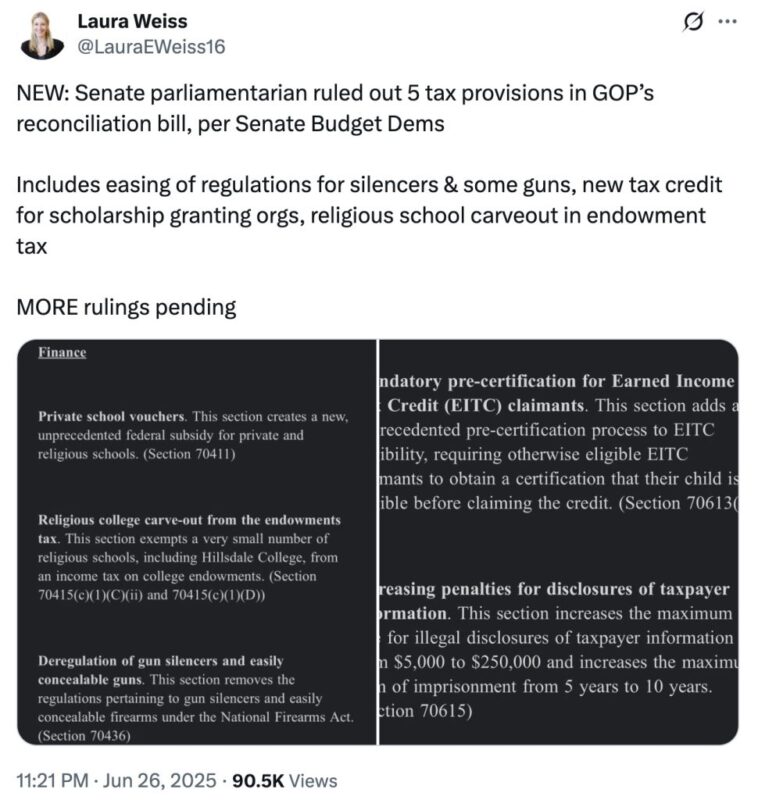
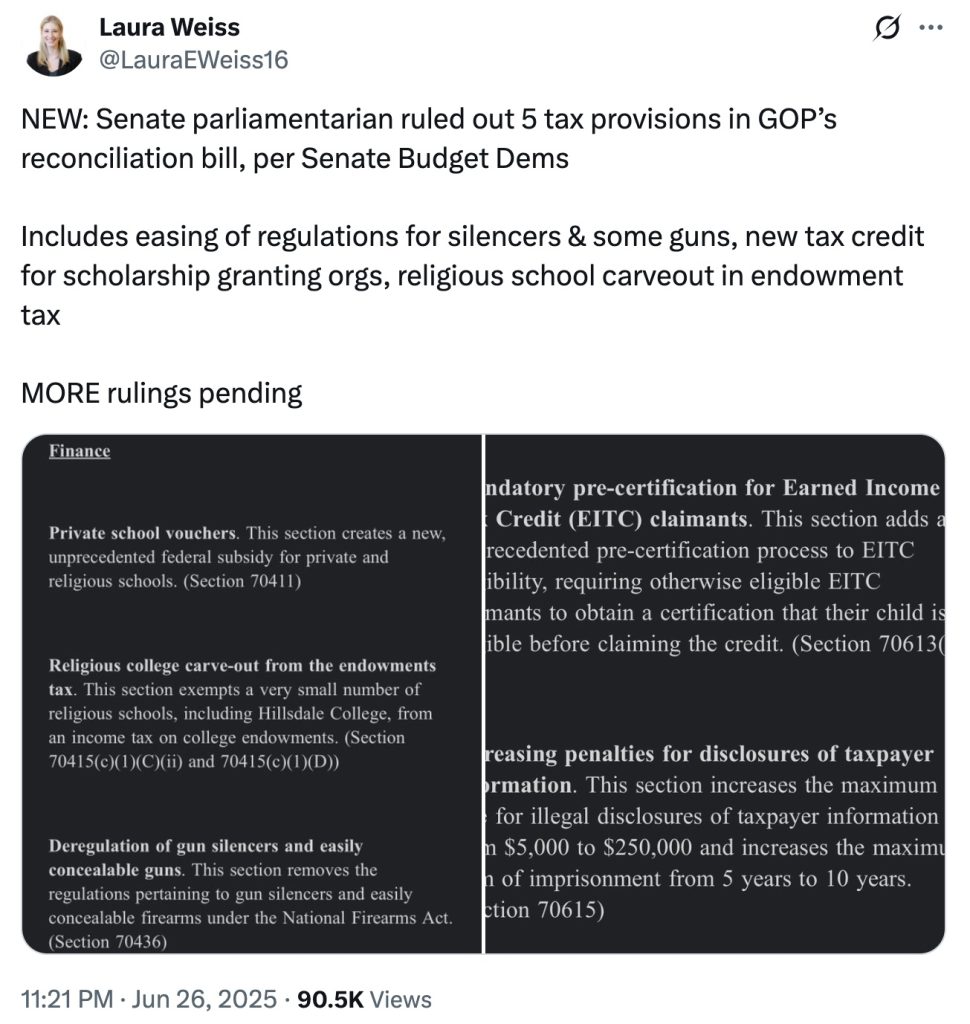
The dynamics of federal gun regulations continue to stir debate in American politics. In a recent twist, the Senate parliamentarian, Elizabeth MacDonough, made a decisive ruling against including certain provisions in the Big Beautiful Bill. This decision has caught the attention of advocates and critics alike, as it brings to the forefront the tricky parts of reconciling tax measures with gun rights. This op-ed takes a closer look at the situation, exploring the tangled issues of firearm legislation, tax policies, and bureaucratic responsibilities.
The Senate’s Role in Shaping Firearm Legislation
When Elizabeth MacDonough removed the Hearing Protection Act and the SHORT Act from the legislative package, the implications were wide-ranging. Her claim that these additions exceeded limitations outlined by the Byrd rule has significant consequences for those who support deregulation measures and gun rights. Instead of providing a simplified process for regulatory compliance, the ruling forces proponents to use traditional channels, subjecting the proposals to a Senate filibuster that demands 60 votes for passage.
This decision has sparked a heated debate among lawmakers and the public, with critics arguing it prevents progress in reforming outdated federal measures. On the other hand, supporters claim that strict adherence to procedural rules is critical, even if it means facing nerve-racking delays on critical issues. The debate is further complicated by the intertwined history of the National Firearms Act, a tax measure that dates back to 1934.
Understanding the Zero Tax Conundrum in Firearm Legislation
One of the most intriguing aspects of the current legislative discussions is the idea of reducing the excise tax on transfers of suppressors, short-barreled rifles (SBRs), short-barreled shotguns (SBSs), and any other weaponry affected by the law to zero. Presumably, such a measure could simplify ownership procedures and generate significant taxpayer savings.
At first glance, a zero tax might look like a straightforward solution. However, reducing a tax to zero does not at all erase the compliance requirements originally imposed. The language of the National Firearms Act leaves many of these subtle parts—such as submitting personal identification details like a name, photograph, and fingerprints—to be determined by federal authorities. Originally under the purview of the Treasury secretary and IRS commissioner, these administrative responsibilities appear to have shifted to modern-day regulators such as the Attorney General and the head of the ATF.
This subtle twist underscores the challenge for lawmakers and enforcement agencies: How do you balance the benefit of dropping the tax with the reality of maintaining an expensive and burdensome system? A zero tax does not reduce the costs to the government, even if it might lessen the immediate financial barrier for compliant gun owners.
The Impact of Deregulation on Gun Ownership Costs
It is estimated that millions of dollars could be saved in administrative costs if simpler, less red-tape-laden procedures were implemented for managing the National Firearms Act. According to statistics from the Congressional Sportsman Foundation, there are nearly 4.86 million suppressors in private hands. Additionally, in 2021, more than half a million short-barreled rifles were on record, with the ATF later reclassifying pistols with stabilizing braces as SBRs, adding over 255,000 registrations during a temporary tax-free period.
Generalizing these numbers, one can imagine a scenario in which removing even part of the bureaucratic load could lead to savings stretching into the millions. However, while the elimination of the excise tax might offer an immediate financial relief, the unchanged compliance procedures ensure that the costs associated with regulatory oversight remain. For gun owners, this means that dropping the tax might not translate directly into decreased administrative hassle.
Historical Context: The National Firearms Act as a Tax Measure
Historically, the National Firearms Act has never been treated as a constitutional dispute over the Second Amendment. In landmark cases such as Sonzinsky v. U.S. and United States v. Miller, the U.S. Supreme Court affirmed the NFA as a tax measure, distancing it from the realm of Second Amendment rights. These past rulings have continuously upheld the statute’s fundamental structure, acknowledging that, originally, the NFA was intended predominantly as a revenue measure rather than a regulatory one.
This historical approach adds a layer of complexity to today’s debate. For advocates who argue that reducing the tax could undermine the financial structure of the law, the existing legal framework suggests otherwise—a zero tax is still recognized as a tax within the legal system, retaining all of its accompanying compliance requirements.
Examining Pro-Gun Activism and Policy Manipulation
The current legislative maneuver is part of a broader strategy utilized by many pro-gun advocates: gaming a system to secure favorable outcomes while remaining within the legal framework. When the Senate parliamentarian excluded elements of the proposed bills, proponents of gun rights quickly pivoted, exploring alternative ways to address these issues. Rather than accepting a dead end, they began considering how to work through the legal and bureaucratic twists and turns to achieve their policy goals.
This strategic maneuvering illustrates both the opportunities and the inherent tensions within the legislative process. While some view it as an innovative application of legal strategy, others see it as a potentially risky exploitation of procedural loopholes. The discomfort arises from the realization that, even with strong pro-gun language present in legislation, vital details about implementation remain subject to intense negotiation and political maneuvering.
Reconciling the House and Senate Versions of the Proposed Laws
Looking closely at the reconciliation process, one finds stark differences between the House and Senate versions of the proposals. In the House, attempts to incorporate pro-firearm language by including measures similar to those in the original Hearing Protection Act gained traction. However, amendments introduced by representatives deemed less supportive of gun rights (commonly referred to as “RINOs” by some activists) led to changes that watered down the initial intent.
For instance, by reducing the excise tax to zero while maintaining the same registration conditions, the House version ended up reflecting a compromise between deregulation and maintaining oversight. This compromise is not without its critics. Many argue that, unless the administrative burdens are also relaxed, reducing the tax alone may only appear beneficial without delivering substantial relief for gun owners. The debates surrounding these changes are riddled with tension and full of problems, as legislators and stakeholders try to balance the spirit of deregulation with the practical needs of maintaining oversight and security.
Budgetary Implications and Compliance Burdens
An important aspect to consider is the financial impact on government operations. With the excise tax reduced to zero, the government would see a significant drop in revenue that previously offset the costs associated with maintaining the registration and oversight procedures. The ATF, which now shoulders the administrative responsibilities originally allocated to the Treasury or IRS, would face a stretch in resources amid an increasing number of firearm registrations.
Consider the following points as a summary of the budgetary challenges in play:
- Zero tax rates still mandate existing paperwork and procedural tasks.
- The administrative burden remains unchanged despite the drop in direct revenue.
- Potential savings for gun owners may be offset by continued bureaucratic costs.
- Reloaded responsibilities for regulators might lead to heavier workload and more strict enforcement measures.
These challenges raise significant questions about the practicality of removing the tax element without also addressing the full spectrum of administrative and regulatory hurdles that remain in place.
Exploring Alternatives: A Closer Look at Policy Options
There are several potential pathways to address these tricky parts of firearm regulation. One approach could be to streamline the compliance process entirely. By reducing the number of requirements—for instance, relying only on minimal background checks and essential identification details—the process could be simplified both for gun owners and for federal agencies.
Another possible solution would be a phased approach. This method could involve gradually reducing administrative oversight while simultaneously introducing new technological solutions, such as online registration systems that could lower administrative expenses. Such a solution would modernize the outdated methods associated with the National Firearms Act, thereby easing the compliance process.
These reform proposals are not without their challenges, and the road to implementation is layered with complicated pieces. Moreover, any major changes would undoubtedly face scrutiny from both sides of the political aisle, reflecting a political environment as loaded with issues as it is with opportunities.
Comparative Analysis: State-Level vs. Federal Firearm Registrations
An intriguing comparison exists when one examines how state-level gun registration processes differ from federal procedures. Many states have implemented their own streamlined systems for the registration of certain items or types of firearms. These state systems often leverage digital platforms, reducing both the wait times and the administrative headaches associated with traditional registration.
In contrast, the federal system, as guided by the National Firearms Act, has remained anchored by legacy processes that date back to the mid-20th century. Although these older methods were designed to meet the needs of their time, they are now often seen as intimidating and off-putting due to their inherent bureaucratic complexity. For gun owners looking for clarity and simplicity, the lure of a modernized system is undeniable.
This contrast between state and federal approaches highlights an opportunity for reform. If the federal system could adopt similar technological conveniences as many state systems, then compliance would not only be easier but also less costly in the long term. The federal government, with its vast resources and technological capabilities, could take a clue from these state-level successes to create a more efficient process.
Legal Precedents and the Role of the Second Amendment
Historically, court cases have shaped the interpretation of gun control measures by establishing that the National Firearms Act is essentially a tax measure and not directly a Second Amendment issue. In United States v. Miller, the Supreme Court explicitly noted that the NFA did not infringe upon the Second Amendment rights. This legal precedent substantiates the view that despite the heated rhetoric, many of the enforcement measures associated with the NFA are not a direct confrontation with constitutional protections.
This legal backdrop is important for both advocates and opponents of current proposals. It means that any substantial change—like reducing the tax to zero—must still adhere to the established procedures under the National Firearms Act. The court’s historical stance serves as a reminder that even as the government seeks to modernize its regulations, it must do so without crossing constitutional lines.
The Role of Treasury, ATF, and Executive Oversight
With all the changes in the federal bureaucratic landscape, one might wonder: who is truly responsible for overseeing the National Firearms Act today? Traditionally, the Treasury secretary and IRS commissioner were the key figures in handling the finely detailed aspects of the law. Over time, these responsibilities have transitioned to the Attorney General and the director of the ATF.
This shift has many implications. The ATF is now shouldering a heavier load, managing both legacy requirements and new regulatory challenges that arise from legislative amendments. The current proposal to reduce the excise tax to zero does little to alleviate this burden and, in some cases, could potentially intensify the workload if more firearms fall under the regulatory umbrella.
Given these circumstances, there is an emerging consensus among some policy experts: any meaningful reform must also address the administrative structure. Simply lowering a tax does not mean that the internal cost structures—that is, the application, record-keeping, and enforcement expenses—will automatically fall in line with expectations.
Potential Savings and the Hidden Costs for Taxpayers
The prospect of shooting for millions in savings by eliminating cumbersome registration procedures is appealing. Yet, a closer look reveals several hidden costs that could ultimately be borne by taxpayers. While gun owners might benefit on the surface, the government would still have to allocate funds to manage compliance.
Below is a breakdown of the cost considerations:
| Area | Potential Savings | Ongoing Costs |
|---|---|---|
| Tax Revenue from Excise Tax | Eliminated revenue from suppressors and SBRs | None directly, but lost funding for administrative processes |
| Administrative Burden | Simpler processing if zero tax simplifies forms | Costs to manage registration and compliance remain |
| Technology Upgrades | Opportunity for streamlined digital systems (long term) | Initial investment and transition costs |
The trend here indicates that, while the notion of reduced oversight might create short-term savings, the overall financial impact is more complicated. It is critical to carefully figure a path that considers both immediate relief for gun owners and long-term sustainability for administrative agencies.
Taking a Closer Look at Congressional and Executive Approaches
The ongoing legislative wrangling over gun regulations reveals a tension between procedural rigidity and the desire for streamlined processes. On one hand, the Senate’s strict adherence to rules like the Byrd rule ensures that no unapproved changes slip through the cracks. On the other, many advocates argue that this cautious approach stifles innovation and delays practical policy improvements.
One potential path forward is for Congress to revisit the regulatory framework using the executive powers granted for procedural changes. Under current law, the president has the authority to implement modifications that could simplify many of the nerve-racking compliance issues. While this doesn’t eliminate the need for legislative oversight, it does create opportunities to work through complicated pieces outside the often slow-moving legislative process.
This dual-track strategy—relying on both executive flexibility and legislative action—could serve as a model for future reform. It would allow for fast, targeted changes that address the hidden complexities of the current system while still adhering to the foundational legal principles that have guided American gun regulation for decades.
Real-World Impacts: How Gun Owners Face Compliance Hurdles Today
For many citizens who exercise their gun rights legally, the bureaucratic hoops created by the National Firearms Act represent more than an abstract legal debate—they are daily challenges that can create delays and frustration. The process of submitting identification details, waiting for approval, and ensuring that all paperwork is in order can be both intimidating and time-consuming. Despite the reduction of the excise tax, the compliance process remains a lingering hurdle.
This reality is concerning for both individuals and small business owners in the firearms industry. The practical implications are multifold:
- Long waiting periods for registration approvals
- Complicated paperwork that requires attention to small distinctions
- Potential security risks if compliance measures are not uniformly enforced
- An overall sense of frustration as procedural requirements persist despite policy changes
These challenges underline the importance of not only adjusting tax rates but also overhauling compliance procedures. The ultimate goal should be to make it easier for legitimate gun owners to figure a path through the administrative maze while ensuring that federal security measures remain robust and effective.
Addressing Public Concerns Through Transparency and Reform Efforts
Given the heated debates and the array of issues at stake, transparency in the legislative process is essential. Public opinion on firearm regulation is often divided, and many voters are eager for reforms that have clear benefits without leading to a relaxation of safety standards. Close attention must be paid to ensuring that any changes are communicated clearly, with an emphasis on both practical benefits and the security of the regulatory framework.
One step forward is to promote a more open dialogue between lawmakers, regulatory agencies, and the public. This involves providing detailed explanations about how changes, such as a zero excise tax, will affect everyday procedures and what measures will be taken to streamline the compliance process. Implementing forums and town halls where policymakers can get into the details of these proposals might help ease public concerns about potential unintended consequences.
Small Distinctions: The Impact of Minimal Administrative Changes
The fine shades of administrative regulation can appear minor, but together they contribute to significant overall cost and complexity. For example, while adjustments to digital paperwork or minor reevaluations of documentation requirements might seem like small distinctions, they can have a substantial impact on how the system functions in practice.
Reforming these subtle parts of the process can not only reduce administrative costs but also improve compliance rates. Simplified registration systems—perhaps modeled on intuitive, web-based platforms—can allow for quicker processing and a marked reduction in bureaucratic bottlenecks. For legislative advocates, these improvements represent a key area where executive action could provide super important, immediate benefits without needing to overhaul the entire statutory framework.
Finding a Middle Ground: Balancing Gun Rights with Regulatory Oversight
The debate over firearm regulation frequently pits the right to bear arms against the government’s duty to regulate and maintain public safety. In many respects, however, the challenges are more about finding a practical middle ground than about choosing one side over the other. Proponents of stricter regulation argue for the necessity of thorough oversight to maintain safety standards, while gun rights advocates call for fewer restrictions and a faster, more efficient system.
Finding a balance means addressing several key issues:
- Maintaining necessary records and compliance protocols to support federal safety measures
- Eliminating redundant bureaucratic steps that do little to enhance security
- Incorporating technology to reduce the workload on regulatory agencies
- Preserving the right to own firearms while ensuring that processes remain manageable and clear
A balanced approach requires lawmakers to work through the administrative twists and turns with an eye toward practicality and fairness. The goal is to create a system that respects individuals’ rights while ensuring that government oversight is both efficient and effective. This middle ground can be reached only through a combination of legislative clarity and executive action, ensuring that each change contributes constructively to the overall regulatory environment.
Implications on Future Legislation and Gun Rights Advocacy
The current debate over the National Firearms Act, particularly in the wake of recent Senate actions, is likely to have lasting implications for future legislative efforts. Advocates of firearm rights are increasingly focused on not just repealing or reforming specific provisions, but on rethinking the entire framework under which gun regulations operate today. Through this lens, the legislative process itself—marked by compromise, debate, and procedural maneuvering—becomes a critical battleground.
Looking forward, several potential outcomes could shape the future of federal gun regulation:
- Adoption of a streamlined and modern registration process using online tools.
- Incremental legislative changes that gradually reduce unnecessary administrative burdens.
- Increased reliance on executive powers to modify procedural requirements swiftly.
- Enhanced communication and transparency in the legislative process to gain public support.
Each of these scenarios presents its own set of challenges, loaded with issues that require careful consideration. Whether these changes will result in a more efficient system or lead to further legal disputes remains to be seen. However, the current debate is a clear indication that the conversation around firearm regulation is evolving—one that now blends traditional legislative action with innovative approaches designed to reap long-term administrative benefits while safeguarding established rights.
Concluding Thoughts: A Call for Balanced Reform and Practical Solutions
In conclusion, the recent proceedings in the Senate highlight the continuing struggle to harmonize gun rights with the practical demands of a modern regulatory state. The decision to remove provisions related to suppressors, short-barreled rifles, and other regulated firearms from the Big Beautiful Bill underscores a broader issue: while changes such as a zero excise tax may appear beneficial, they do not automatically resolve the nerve-racking administrative requirements embedded in the National Firearms Act.
This debate is emblematic of a larger conversation about the role of government in balancing individual freedoms with collective security. Lawmakers, regulators, and advocates must work together to figure a path that preserves second amendment rights while alleviating the complicated pieces of the current system. A balanced approach would simplify compliance without sacrificing oversight—a goal that, if reached, could provide tangible benefits for millions of Americans, from individual sportsmen to responsibility-minded firearm dealers.
The story of the Senate parliamentarian’s recent decision is only one chapter in a long history of legislative tug-of-war over gun policy. It serves as a reminder that behind every statutory provision, there lie hidden complexities and subtle details that have profound implications for the public and the government alike. As the debate continues, stakeholders on all sides must remain engaged, ensuring that reform efforts are transparent, well-informed, and designed to overcome the overwhelming bureaucratic challenges that lie ahead.
Ultimately, the future of federal firearm regulation depends on our ability to identify and reform the problematic parts of existing laws. By embracing innovative solutions and maintaining a commitment to both rights and responsibilities, the United States can shape a regulatory framework that is fair, efficient, and aligned with modern realities. The conversation is far from over, and as this debate evolves, the search for common ground—one that respects individual liberties while ensuring effective governmental oversight—will remain as critical as ever.
Key Takeaways and Policy Recommendations
To summarize the complex landscape of firearm legislation and the challenges discussed, consider these essential policy recommendations:
- Simplify Administrative Processes: Develop digital platforms and streamlined paperwork to reduce the nerve-racking burdens for legal gun owners.
- Reassess Revenue and Cost Structures: Evaluate the impact of a zero excise tax on long-term administrative costs and seek balanced budgetary reforms.
- Increase Transparency: Create public forums where lawmakers detail the fine points of regulatory changes to build trust and clarity.
- Utilize Executive Powers Wisely: Consider using executive authority to make targeted procedural changes that can work through existing hurdles without overstepping constitutional limits.
- Engage Stakeholders: Ensure that both gun rights advocates and regulatory agencies collaborate on proposals that respect the historical legal precedents and practical realities of managing firearm regulations.
Each of these recommendations reflects a commitment to embracing both innovation and prudence—a balance that is critical given the tangled issues inherent in current federal gun regulations. By targeting the root of the compliance and administrative burdens, policymakers can work toward meaningful reform that ultimately benefits both the government and law-abiding citizens.
Looking Ahead: The Path Forward for Gun Regulation Reform
As we move forward, the debates unfolding in Washington provide a unique opportunity to rethink how firearm regulations are managed in the 21st century. The current controversies surrounding the National Firearms Act are just one piece of this larger puzzle—a reminder that effective policy requires both legislative will and practical, on-the-ground solutions. By taking a closer look at the challenges and opportunities presented by modern technology, legal precedent, and administrative reform, lawmakers have the chance to truly modernize federal gun policy.
In this light, future efforts should concentrate not solely on the symbolic removal of certain regulatory measures but also on a comprehensive review of the entire compliance framework. It is not enough to reduce a tax rate if the paperwork and administrative costs remain unchanged. Instead, there needs to be a balanced approach that modernizes every aspect of the process, ensuring that compliance is both efficient and secure.
The energetic debate over these issues demonstrates that, even in a politically charged environment, there are paths available to sort out the overwhelming bureaucratic twists and turns. Whether it be through new technology, policy adjustments, or more prudent use of existing executive powers, the path forward calls for careful planning and open dialogue among all stakeholders involved.
Both gun rights advocates and regulatory officials share a common goal: to create a system that respects the legal rights of American citizens while ensuring that necessary oversight and safety measures remain intact. This balance—difficult as it may be—is essential for maintaining public trust and upholding constitutional values as we continue to adapt to modern challenges.
Ultimately, the future landscape of federal gun policy will be shaped not only by the language of legislation but also by the practical actions taken by policymakers and regulators. It is a future that demands both cautious innovation and steadfast adherence to the foundational principles of American law.
Final Reflections
The recent developments concerning the National Firearms Act illustrate a critical moment in the ongoing conversation about gun regulation in America. As Senate procedures, administrative responsibilities, and budgetary realities collide, the need for a well-thought-out, balanced approach becomes clear. Lawmakers, advocates, and regulatory agencies must all take a closer look at the subtle differences that define the current system—recognizing that even minor adjustments can have far-reaching consequences.
There is no single, simple solution to the complex administrative bits that make up federal firearm regulation. Instead, it will require a concerted effort to reduce redundant bureaucracy, modernize essential processes, and ensure that any changes made serve the interests of both personal liberties and national security.
In the end, the goal should be to create a system where legal gun ownership is not hindered by intimidating and off-putting compliance hurdles—where the government preserves its regulatory obligations without overburdening its citizens. Achieving this balance is super important, not just for today’s gun owners but for the future of American democracy. Only through thoughtful, transparent, and balanced reform can the challenges outlined here be effectively addressed.
This opinion editorial invites readers, regardless of their stance on gun rights, to consider the broader implications of legislative decisions. It is a call to think critically about how laws are made and implemented, and a reminder that progress often comes from addressing both the visible issues and the hidden, nerve-racking details alike.
Originally Post From https://www.buckeyefirearms.org/how-senate-parliamentarian-gamed-national-firearms-act
Read more about this topic at
Wikipedia:Gaming the system
Gaming The Systems