http://www.break.com/embed/1351221?embed=1
California’s Revised Firearm Law: A Closer Look at AB 1078
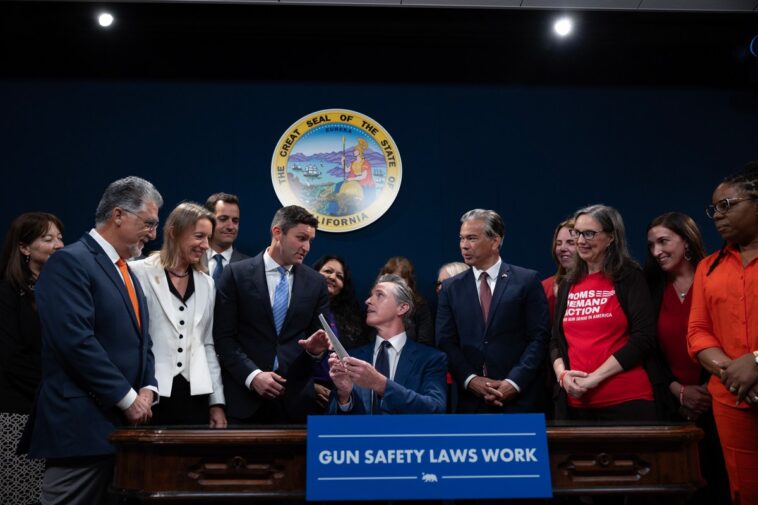
Governor Gavin Newsom’s recent signing of Assembly Bill 1078 marks a pivotal moment in California’s ongoing efforts to tighten its firearm regulations. This new law, crafted by Assemblymember Marc Berman and supported by Attorney General Rob Bonta, is designed to restrict gun trafficking, update concealed carry regulations, and align state law with recent Supreme Court decisions. In this opinion editorial, we take a closer look at the bill’s provisions, the reasoning behind these measures, and the potential challenges and benefits they bring to the state.
California has long been known for its robust approach to gun safety. With AB 1078, the state enacts a three-gun-per-month purchasing limit that aims to stem the flow of firearms into dangerous black markets, while also revising the rules for concealed carry weapons. Though these changes may seem intimidating to some, they are intended as a measured response to ongoing issues, such as gun violence and the evolving interpretations of constitutional rights.
Understanding the Three-Gun-Per-Month Purchasing Limit
At the heart of AB 1078 is the new restriction that limits gun purchases to three per month. This measure is designed to target the tricky parts of gun trafficking—the illegal movement and distribution of firearms that often contribute to violent crime. By imposing a cap on purchases, lawmakers hope to make it more challenging for individuals or networks to accumulate large numbers of guns quickly.
This purchasing limit serves several key purposes:
- Reducing the Possibility of Bulk Trafficking: Limiting purchases helps thwart efforts by arms traffickers to buy large quantities for resale.
- Improving Accountability: With a cap in place, tracking and identification of unusual purchase patterns become more straightforward for law enforcement.
- Encouraging Responsible Ownership: Gun buyers are encouraged to evaluate the need for additional firearms, fostering a culture of measured responsibility.
The measure is clearly a response to the overwhelming rate of gun violence, where, as Assemblymember Berman noted, “one person has been killed by gun violence every thirty-five minutes.” Despite criticism from various quarters, the intent is to mitigate the tangled issues that contribute to the state’s firearm challenges.
Impact on Gun Trafficking: Steering Through the Legal and Social Implications
The new regulation is aimed squarely at reducing gun trafficking. Lawmakers believe that curbing the number of guns an individual can purchase each month will make it harder for those looking to engage in illicit sales to misappropriate California’s more lenient buying practices. This move, driven by evidence-based policy initiatives, demonstrates California’s super important commitment to beefing up public safety.
Some of the potential benefits of this approach include:
- Disrupting Illegal Networks: Smaller purchase limits mean that even if one transaction is compromised, it is more manageable in scope.
- Enhanced Monitoring: With reduced volume per buyer, law enforcement agencies can better monitor purchasing patterns and intervene when suspicious behavior is spotted.
- Setting a Precedent: California’s initiatives might serve as a template for other states attempting to confront similar issues related to gun trafficking and uncontrolled proliferation of firearms.
While critics argue that such restrictions might be unconstitutional based on Supreme Court rulings, the state’s legal teams maintain that the bill has been carefully drafted to conform with recent decisions, ensuring that public safety remains a top priority while respecting individual rights.
Aligning State Regulations with Supreme Court Decisions
One of the more compelling aspects of AB 1078 is how it realigns state firearm laws with the latest Supreme Court decisions, including New York Rifle Association v. Bruen and United States v. Rahimi. These cases have forced states to carefully consider how they craft their gun regulations, making sure that public safety measures do not infringe on constitutional rights.
California’s approach in AB 1078 reflects a balance between these sometimes conflicting objectives. On one hand, the state has a record of implementing evidence-based policies that have demonstrably saved lives. On the other, it must accommodate court interpretations that emphasize individual rights.
Key points include:
- Case Law Compliance: The new legislation is structured to be consistent with the fine points of recent case law, thus reducing legal vulnerabilities and potential court challenges.
- Protective Measures: By updating concealed carry rules and purchase limits, the bill makes certain that the state maintains a proactive stance on gun safety.
- Legal Balance: Even with tightened laws, California aims to protect citizens’ constitutional rights, a balance that is critical in today’s heated political landscape.
The convergence of state law with federal guidelines marks a turning point in a state that strives to be a leader in evidence-based firearm regulation. It also signifies an effort to untangle some of the confusing bits of legal disputes surrounding gun rights and safety requirements.
Revising the Rules on Concealed Carry Weapons
Another significant element of AB 1078 is the update to California’s concealed carry weapons (CCW) regulations. These updates are seen as necessary in light of both legislative changes and judicial interpretations resulting from recent Supreme Court decisions.
The revised CCW rules aim to ensure greater clarity and uniformity across the state while retaining a strong focus on public safety. Some of the key changes include:
- Enhanced Background Checks: The law reinforces background check protocols to help guarantee that only those who meet stringent criteria are granted permits.
- Updated Training Requirements: Applicants seeking concealed carry status may face more comprehensive training standards, ensuring they have the knowledge to responsibly handle a firearm.
- Streamlined Application Process: Despite the tougher standards, state authorities are also working to streamline the application process to prevent undue delays for law-abiding citizens.
These adjustments reflect a broader trend in California’s legal approach: finding your way through the maze of modern firearm issues by integrating practical safety measures with respect for individual freedoms.
Balancing Public Safety and Constitutional Rights
One of the most challenging parts of gun legislation is striking a balance between public safety and the constitutional rights guaranteed by the U.S. Constitution. In the case of AB 1078, both Assemblymember Berman and Attorney General Bonta stress that the updated regulations are intended to protect citizens without overstepping constitutional boundaries.
Key talking points in this regard include:
- Preservation of Life: The argument often centers on the responsibility of ensuring that regulations contribute to lowering the number of gun violence casualties—a goal the new law seeks to achieve by putting limits on firearm purchases.
- Legal Conformity: By aligning with recent Supreme Court decisions, the bill demonstrates that strict measures can be designed without disregarding the fine points of constitutional law.
- Balanced Policy Making: The state’s approach is neither alarmist nor lax; instead, it strikes a tone of measured response aiming to manage your way through some of the twisted issues surrounding gun control in America.
In summary, while there are voices both in favor of and against the new law, the overarching goal remains the protection of public safety—a critical issue that can rarely be ignored when considering the toll of gun violence in communities.
Historical Context and the Evolution of California Gun Laws
California’s approach to gun laws has evolved significantly over the decades, moving from relatively lenient standards to some of the strictest regulations in the nation. AB 1078 is not an isolated policy adjustment; rather, it builds upon a legacy of legislative actions aimed at curbing gun violence while ensuring that legal frameworks remain just and robust.
Several key historical points are worth noting:
| Period | Notable Legislative Actions | Impact |
|---|---|---|
| Early 2000s | Implementation of background checks and mandatory waiting periods | Helped reduce immediate access to firearms by high-risk individuals |
| 2010s | Expansion of restrictions on assault weapons and high-capacity magazines | Contributed to a lower rate of mass shootings |
| 2020s | Introduction of purchase limits and concealed carry updates | Strengthening overall legal safeguards and aligning with judicial decisions |
By exploring these milestones, it becomes clear that California has been working its way through many of the confusing bits related to firearm regulation over the years. Each successive policy has been a response to the hidden complexities of gun-related challenges—from evolving criminal tactics to changing societal values regarding safety and personal freedom.
Examining the Legal and Social Debates Surrounding AB 1078
The introduction of AB 1078 has sparked a range of responses from various stakeholders, including legal experts, civil rights advocates, and members of the general public. These debates often highlight the tricky parts of balancing rigorous public safety measures with the right to keep and bear arms—a contentious subject with many little twists.
Some of the main points raised in these debates include:
- Constitutional Concerns: Several critics argue that setting purchase limits could be seen as an infringement of constitutional rights. However, the state’s legal teams insist that the law is carefully designed to steer through constitutional requirements.
- Effectiveness of Restrictions: Proponents of the law point to data suggesting that strong gun laws correlate with lower rates of gun violence. They stress that even overwhelming issues need measurable, evidence-based solutions.
- Potential for Unintended Consequences: Skeptics wonder if such limitations might inadvertently affect law-abiding citizens, complicating the process for collectors and responsible gun owners.
In many respects, the ongoing debate mirrors a larger national conversation about the best ways to enact safe, responsible, and legally conforming firearm policies. California, once again, finds itself at the center of a crossroad where public safety and individual rights must be carefully weighed.
Evaluating the Evidence: Does Tougher Regulation Equate to Better Safety?
In discussions about gun regulation, evidence-based arguments play a super important role. Proponents of AB 1078 point to the state’s impressive record of low firearm death rates as a testament to the effectiveness of previous, well-crafted legislation. For many, the argument is that tighter rules—when applied fairly and consistently—lead to fewer instances of gun misuse.
Several factors provide support for this perspective:
- Comparative Statistics: California often ranks among the states with the lowest rates of gun-related deaths, a fact cited by Attorney General Bonta. This suggests that an environment with strict regulations can indeed lead to safer communities.
- International Comparisons: Observations from other countries that implement super important firearm restrictions also indicate positive outcomes, including reduced gun trafficking and violence rates.
- Studies and Data Analysis: Numerous research reports have highlighted the relationship between restricted access to firearms—especially through purchase limits—and decreases in gun-related crimes. These studies offer reassurance to lawmakers who are already burdened with trying to manage their way through the tangled issues of public safety.
Yet, the evidence is not without its critics. Some legal scholars caution that while the intention of limiting mass gun purchases is sound, there remains a risk of oversimplifying the wide-ranging and complicated pieces in modern gun debates. As with many policies that affect constitutional rights, the key lies in the fine details of how the law is implemented and enforced.
California Concealed Carry Updates: A Closer Look at the Changes
The modifications to California’s concealed carry weapons (CCW) regulations under AB 1078 are another critical shift aimed at modernizing and tightening firearm oversight in the state. By tightening the criteria and process for obtaining a CCW permit, the law intends to ensure that those who carry firearms in public do so with a full understanding of the associated responsibilities.
Important changes include:
- Improved Training and Certification: Applicants might need to complete additional courses that cover tactical defense, crisis management, and legal responsibilities, ensuring that the knowledge passed on is not just surface-level but gets into the nitty-gritty of firearm handling.
- Enhanced Background Verification: Beyond standard background checks, the updated process may include more rigorous investigations into an applicant’s history, aimed at uncovering any potential red flags.
- Clearer Eligibility Criteria: Streamlining the rules helps reduce confusion over who qualifies for a CCW permit and under what circumstances, providing clearer guidance for both the public and law enforcement agencies.
These changes have been met with a mixed response. On one side, proponents argue that tougher standards will contribute to reduced gun violence. On the other, critics view the updates as yet another example of how regulatory measures can complicate the lives of responsible gun owners. Nevertheless, the principle behind these revisions is to work through the challenging aspects of current policy to both promote public safety and respect legal rights.
Legal Precedents and the Future of Firearm Regulation in California
AB 1078 does not exist in a vacuum. It is part of a broader continuum of legal adjustments that California has made over the years—each intended to work through the intricate twists and turns of evolving public safety needs. As state lawmakers revisit and refine these regulations, the influence of recent Supreme Court cases is becoming more apparent.
Some legal precedents that have shaped today’s firearm policies include:
- New York Rifle Association v. Bruen: This decision has changed how states evaluate the balance between public safety measures and individual rights, influencing how new laws are framed.
- United States v. Rahimi: This ruling further underscored the necessity of ensuring that gun control laws respond properly to constitutional challenges, setting a benchmark for states like California.
- Senate Bill 2 Developments: Earlier measures, such as Senate Bill 2, laid the groundwork for current reforms by establishing a framework within which firearms can be regulated while still honoring state and federal mandates.
Looking ahead, it seems likely that California will continue to adjust its framework for firearm regulation. Lawmakers must regularly poke around the evolving legal landscape, always keeping an eye on how federal decisions might impact local policies. This dynamic interplay between state action and federal oversight will remain a key challenge as future cases further define and refine the super important balance between public protection and constitutional rights.
Addressing Public Concerns and Political Criticism
As with almost any significant change to public policy, AB 1078 has faced its share of criticism and political debate. Some detractors argue that the new purchasing limit is merely a symbolic gesture—a way to appease public opinion without addressing the root causes of gun violence. Others claim that legal challenges could eventually result in parts of the law being thrown out, given historical precedents regarding limits on firearms purchasing.
Critics have raised issues such as:
- Alleged Constitutional Overreach: Opponents contend that imposing a numerical limit per month infringes on the traditional rights of citizens and could run afoul of Supreme Court interpretations.
- Practical Concerns: Some fear that law-abiding citizens might face unexpected hurdles when seeking to purchase additional firearms for self-defense or sporting purposes.
- Political Maneuvering: There is also a broader suspicion that such changes are influenced by shifting political winds and may be subject to revision with incoming administrations.
Despite such criticism, both Assemblymember Berman and Attorney General Bonta have defended the law’s provisions. They maintain that even if a single life is lost to gun violence, it is one too many—a point that continues to resonate deeply amid the state’s ongoing struggles with gun-related crime. Their approach reflects a commitment to taking a closer look at every fine shade of the issue, ensuring that new measures are not just reactionary but truly tailored to the demands of modern firearm policy.
Comparing California’s Approach with Other States
California’s innovative approach, as exemplified by AB 1078, stands in contrast to policies in several other U.S. states. While some regions maintain far looser gun regulations, California is consistently rated as one of the states with the strictest and most comprehensive firearm policies. This section examines how the new legislation fits within the broader national landscape.
Key differences include:
- Regulatory Breadth: Whereas some states focus primarily on background checks, California opts for a more holistic framework that also regulates purchase limits and concealed carry.
- Proactive vs. Reactive Legislation: California’s laws tend to be proactive—designed to preempt gun violence rather than merely reacting to it after the fact.
- Legal Adaptability: By aligning its rules with recent Supreme Court decisions, California is well positioned to adapt to shifting legal standards, a flexibility that some other states may lack.
Below is a simple table summarizing key comparisons:
| Aspect | California | Other States (Selected Examples) |
|---|---|---|
| Gun Purchase Limits | Three per month | Often no limit or much higher thresholds |
| Concealed Carry Regulations | Strict application, enhanced training | Variable standards, sometimes looser requirements |
| Legal Alignment | Closely follows recent Supreme Court rulings | Often lag behind or maintain established practices |
This comparison highlights the fact that while California’s methods may appear intimidating or overly complex to some, they are part of a broader strategy aimed at reducing gun violence and ensuring the safety of its residents.
Community Response and the Role of Media
The new law has not escaped public scrutiny. Social media platforms and local news outlets have become a battleground for differing opinions, with some community members praising the measure as a necessary step toward improved safety, and others decrying it as government overreach. This diverse spectrum of voices illustrates the nerve-racking challenge that legislators face when crafting policies that must satisfy a wide array of interests.
It is critical for the media to provide balanced coverage by:
- Highlighting the Evidence: Emphasizing data on firearm-related deaths and success stories from earlier gun safety initiatives.
- Presenting Multiple Perspectives: Offering space for legal experts, policymakers, and citizens to express their views on the fine points of the law.
- Encouraging Constructive Public Discourse: Fostering debates that focus on practical solutions rather than partisan rhetoric.
This role of the media is super important because an informed public is better equipped to understand not just the letter of the law, but its intended impact on community safety and individual freedoms.
Potential Future Revisions and the Path Ahead
As with any piece of legislation, the future of AB 1078 is likely to be dynamic. The law’s measures will be closely monitored by courts, law enforcement, and advocacy groups. Future legal challenges may emerge, and lawmakers may need to tweak the regulations as new evidence and societal changes come to light.
Possible areas for future review include:
- Adjustment of Purchase Limits: Depending on the effectiveness of the three-gun cap, legislators may consider either tightening or relaxing the limits.
- CCW Permit Process: Ongoing feedback could drive changes in training, background checks, or eligibility criteria to better serve both public safety and individual rights.
- Technological Integration: Enhanced data analytics and tracking systems could be implemented to more effectively monitor gun purchases and usage patterns, ensuring that the state can promptly address any emerging trends in gun trafficking.
Importantly, any future revisions will need to account for the competing demands of safety, legal consistency, and the unpredictable twists and turns of political and societal change. By remaining flexible and willing to adjust, lawmakers can continue to protect lives while also respecting the rights enshrined in the Constitution.
Examining the Broader Implications for American Gun Policy
California’s legislative activities often serve as a bellwether for national debates over gun control. With AB 1078, the state reinforces its position as a leader in evidence-based firearm regulation. This has implications that reach far beyond state borders. Other states—especially those facing similar issues with gun trafficking and public safety—may look to California’s model when designing their own laws.
Looking at the broader picture, the following points become apparent:
- Policy Innovation: California’s willingness to adopt tough but considered measures encourages a national dialogue focused on proactive safety solutions.
- Judicial Impact: As the courts continue to assess the fine points of these laws, nationwide legal standards may gradually evolve, influencing the balance between individual rights and public safety everywhere.
- Interstate Comparisons: Data from California is often used in comparative studies that assess the effectiveness of various gun control strategies, offering valuable insights for federal policymakers.
For advocates of tighter regulations, California’s example underscores that it is possible to work through complicated pieces of policy without sacrificing constitutional safeguards. For critics, it raises important questions about the boundaries of regulation within a federal system that values both state innovation and national uniformity.
Reflections on the State’s Commitment to Safety and Justice
In the final analysis, AB 1078 stands as a testament to California’s continuous commitment to public safety. By imposing a purchasing limit and revising CCW regulations, the state is taking a proactive approach to dealing with the serious issues associated with gun violence. While these changes are not a cure-all, they represent a calculated effort to work through the problematic bits of gun legislation in a way that acknowledges both the value of life and the rights of individuals.
Supporters of the law point to the following super important aspects:
- Data-Driven Decision Making: Legislative changes are backed by statistics that suggest a reduction in violent crime rates where stringent firearm laws are enforced.
- Legal Consistency: Aligning with Supreme Court decisions ensures that the law is not vulnerable to successful legal challenges in the future.
- Community Safety: By restricting the channels through which firearms can flood the market, California is helping to create safer neighborhoods for its residents.
Those who oppose the law, however, caution against potential pitfalls such as bureaucratic red tape, unintended consequences for responsible citizens, and the risk that future judicial rulings may challenge these measures. Ultimately, the debate is far from settled, and it is clear that the process of finding your way through these legal challenges will remain an ongoing process for lawmakers, courts, and citizens alike.
Conclusion: A Measured Step Forward Amid Ongoing Debates
AB 1078 is a clear statement from California’s government: the state is not willing to leave any stone unturned when it comes to protecting its residents from gun violence. With a three-gun-per-month purchasing limit and updated concealed carry regulations, California is stepping up to address the overwhelming issues that have long plagued American society.
While opinions on the law remain divided, it is evident that California is working through the tangled issues of gun legislation in a way that is both thoughtful and aligned with modern judicial expectations. As legal experts, policymakers, and the public continue to debate these measures, the state’s approach serves as a compelling case study in how evidence-based policy can help figure a path through the complicated twists of protecting both public safety and constitutional rights.
In many ways, AB 1078 encapsulates the challenge of making policy in today’s America—a task that is never off-putting in its complexity, yet is essential if we are ever to reach solutions that truly balance the need to save lives with the necessity of upholding our fundamental freedoms. As this law takes effect and its impacts begin to be felt, only time will tell whether California’s bold approach will serve as a blueprint for the rest of the nation or if further adjustments will be needed as new challenges emerge.
For now, Californians have taken another step into uncharted territory, exploring the fine points and subtle details of firearm regulation in an era defined by both rapid legal evolution and the ever-present need to protect public safety. Whether one views AB 1078 as a groundbreaking success or a controversial gamble, it unquestionably marks a turning point in the state’s ongoing journey to manage its way through some of the most nerve-racking issues of our time.
Ultimately, the effectiveness of these measures will rest on continuous scrutiny, data collection, and a willingness by all parties involved to adapt as conditions change. For policymakers and legal observers alike, the road ahead promises to be as challenging as it is crucial—one that requires a constant reappraisal of what it means to balance safety, responsibility, and the cherished rights of every citizen.
As Californians and citizens across the country watch these regulatory changes unfold, it is clear that the debate over gun control is far from over. In the coming months and years, we can expect continued advocacy, legal challenges, and public debates as all stakeholders strive to figure a path that ensures both individual freedom and the super important collective security. In the meantime, the experience of California under AB 1078 offers a rich source of insights—a case study in how a state can try to tackle the overwhelming challenges of gun violence while remaining firmly anchored in its constitutional foundations.
Originally Post From https://www.newsbreak.com/golden-gate-media-1351221/4285716185105-california-s-strict-gun-ownership-laws-are-getting-stricter-after-newsom-approves-regulations
Read more about this topic at
California: Legislature Adjourns with Anti-Gun Bills Headed …
California Glock Ban and Gun Barrell Crackdown Begins