Assessing the Impact of Stand-Your-Ground Laws on Homicide Rates and Community Safety
Stand-your-ground laws have long been a subject of debate and discussion in the United States. These laws, now in effect in more than half of U.S. states, remove the legal duty to retreat in self-defense situations. Originating from the centuries-old castle doctrine—which allowed individuals to use force to protect themselves at home—the modern interpretation expands the right to use deadly force beyond one’s residence. This opinion editorial aims to offer a balanced perspective on these policies by examining their effects on homicide rates, racial disparities in legal outcomes, and the broader public costs associated with gun violence.
In recent years, research and studies have indicated that states with stand-your-ground laws tend to see elevated homicide rates. Critics argue that these policies give individuals what some consider a “free license to shoot and kill,” while advocates believe that they provide necessary protection in dangerous situations. Taking a closer look at the evidence, it is important to understand the various twisted pieces of this legal debate so that communities can better figure a path through the tangled issues surrounding self-defense and public safety.
Evolution of Self-Defense Doctrines: From Castle Doctrine to Stand-Your-Ground
The concept of protecting one’s home has deep historical roots. The castle doctrine provided the legal foundation for a person to use force if necessary when confronted in their private residence. However, as society evolved, so did the interpretation of this self-defense principle. Modern stand-your-ground laws extend this right to public spaces, allowing individuals to use deadly force without first having to retreat, even outside the safety of their homes.
Diving into the Historical Context and Legal Evolution
To appreciate the current debate, it is useful to dig into the evolution that has taken these laws from a protective measure in the home to a broader justification for using lethal force. Key historical moments, such as the enactment of Florida’s stand-your-ground law in 2005 and its national spotlight following the tragic shooting of Trayvon Martin in 2012, have prompted the legal community and the public to reexamine what constitutes self-defense. While the law is designed to empower individuals to defend their lives, critics contend that the broader application has led to unexpected and sometimes dangerous consequences.
This evolution can be best summarized by examining the following timeline:
- Pre-2000s: The castle doctrine firmly stands as a principle confined to the home, offering protection against intrusion within one’s private sphere.
- 2005: Florida pioneers the expansion of self-defense rights beyond the home, marking the advent of modern stand-your-ground laws.
- 2012: The killing of Trayvon Martin brings intense media scrutiny and national debate regarding the adequacy and fairness of these laws.
- Recent Years: Ongoing research and studies suggest a significant uptick in homicide rates and a widening of legal outcome disparities associated with these policies.
Examining Racial Disparities in Legal Outcomes: A Closer Look
One of the more pressing issues linked to stand-your-ground laws is the emergence of racial disparities in justifiable homicide rulings. Data from recent studies have revealed that in states where these laws are active, homicides involving white shooters and Black victims are ruled justifiable significantly more often than the inverse scenario.
Unequal Application of the Law Across Racial Lines
Researchers have uncovered disturbing figures when comparing cases by race. In some states, such as Michigan, this disparity is notably stark—with justifiable homicide rulings showing more than a twelvefold difference between cases involving white shooters with Black victims versus those in which the roles are reversed. These findings point to hidden complexities, or rather, tangled issues within the application of these laws that may reflect broader societal inequalities.
Some key points to consider are:
| Aspect | Observation |
|---|---|
| Justification Rulings | Homicides involving white shooters with Black victims are ruled justifiable four times more frequently on average. |
| Regional Variations | Some states, exemplified by Michigan, show even larger disparities exceeding a twelvefold difference. |
| Impact on Legal Outcomes | Women claiming self-defense in domestic violence cases also face disparate outcomes, receiving longer sentences and higher conviction rates. |
These results prompt a closer reexamination of the underlying assumptions of stand-your-ground legislation and call for further research to untangle the confusing bits of racially biased legal practices. The impact on public trust in the legal system cannot be understated, as these outcomes have fueled debates about fairness and equal protection under the law.
Economic and Public Safety Costs Associated with Stand-Your-Ground Laws
Aside from the human cost, there is a significant economic burden attached to the higher homicide rates and increased law enforcement challenges that are associated with stand-your-ground laws. Studies have estimated that gun homicides related to these legal provisions cost the public an estimated $11 billion annually. These costs encompass expenses for law enforcement, court proceedings, and medical care, among others.
Breaking Down the Economic Impact
When evaluating the financial side of stand-your-ground laws, it is useful to break down the various elements of the cost structure. The following bullet list outlines the key economic pressures:
- Law Enforcement: Increased incidents result in more resources allocated to policing and emergency response.
- Judicial Costs: Court proceedings in cases ruled as justifiable homicides demand significant taxpayer funding.
- Medical Expenses: Higher rates of firearm injuries lead to more medical care and rehabilitation costs.
- Insurance Premiums: Communities with elevated violence may see an uptick in insurance costs related to property and personal protection.
Each of these factors contributes to a broader economic strain that is ultimately shouldered by taxpayers. While proponents of stand-your-ground laws argue that these policies are necessary for individual protection, the cumulative public cost raises important questions about the overall benefit of these laws to society.
Understanding the Data Behind Homicide Increases
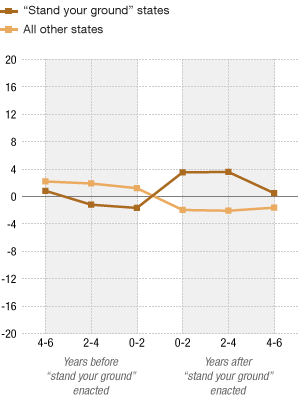
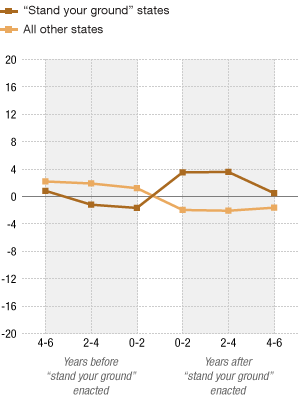
Numerous studies have attempted to quantify the tangible effects of stand-your-ground laws on public safety. A standalone 2022 study published in a peer-reviewed medical journal found that there is an 8% to 11% increase in monthly homicide and firearm homicide rates nationwide in states that have adopted these laws.
Key Findings from Research Studies and FBI Data
Detailed analysis of FBI data from 2019 to 2023 further underscores the significance of these findings. This research revealed that gun homicides in certain Southern states—such as Alabama, Florida, Georgia, and Louisiana—exhibited increases of 10% or more. Over time, these increments translate to an additional 700 gun deaths each year across the nation. Such figures not only cast a spotlight on the public health risk but also demonstrate the far-reaching and sometimes overwhelming consequences of policies that may be well-intentioned yet yield problematic outcomes.
The following table summarizes some critical research findings:
| Study/Source | Key Finding |
|---|---|
| JAMA Network Study (2022) | Identified an 8% to 11% increase in monthly homicides in states with stand-your-ground laws. |
| Everytown Report | Estimated over 700 additional gun deaths per year and a total cost of $11 billion annually to society. |
| FBI Data Analysis | Noted a significant racial imbalance in justifiable homicide rulings in stand-your-ground states. |
These figures compel us to take a closer look at how public policy can have unintended consequences. Critics argue that by failing to steer through the subtle details of this policy, lawmakers may inadvertently be creating a framework where public safety is compromised and community trust is eroded.
Stand-Your-Ground Laws and Domestic Violence: A Problematic Intersection
Another aspect of the debate that warrants attention is how stand-your-ground laws interact with cases of domestic violence. Research indicates that women who claim self-defense in these situations are often subject to more severe legal consequences compared to other defendants. These findings raise concerns about the narrow interpretations of self-defense and the nerve-racking implications for victims of domestic abuse.
Assessing the Impact on Vulnerable Populations
For many survivors, the legal system is full of problems and riddled with tension when it comes to recognizing self-defense claims in domestic violence situations. Critics argue that the law, in its current form, tends to overlook the complicated pieces of abuse dynamics, thereby making it even more challenging for victims to secure fair treatment in court. Some of the key issues include:
- Higher Conviction Rates: Research suggests a tendency for higher conviction rates for women who invoke self-defense in a domestic setting.
- Longer Sentences: Victims often face longer prison terms compared to individuals in analogous cases where their self-defense claim is not scrutinized as heavily.
- Systemic Bias: These outcomes may be influenced by broader, small distinctions in how the legal system views domestic disputes, which often leaves vulnerable populations without the protection they need.
This intersection of stand-your-ground laws with domestic violence issues illustrates how a policy intended to protect lives might, on occasion, have twisted outcomes that leave some of society’s most vulnerable groups exposed to further legal and personal challenges.
The Broader Public Debate and Legislative Developments
The public discourse surrounding stand-your-ground laws remains vibrant and often divided. Recent legislative debates in several states have highlighted the cautious balance lawmakers must maintain between protecting individual rights and ensuring community safety. As the national conversation evolves—with discussions on red flag laws, safe storage mandates, and even rapid-fire attachments—the need for a careful reassessment of stand-your-ground policies has become increasingly clear.
Recent Developments in Lawmaking and Public Opinion
Polls and surveys indicate that stand-your-ground laws continue to enjoy significant support among portions of the American public, particularly within conservative circles. For instance, a 2023 national survey revealed that 58% of Americans support these laws—with 81% of Republicans and 57% of independents expressing backing—while 60% of Democrats oppose them.
These figures underscore a core tension in contemporary policy debates:
- Individual Rights vs. Collective Safety: Proponents argue that these laws are essential for personal protection, while opponents believe that they create an environment where community safety is compromised.
- Legislative Backing: Strong support from gun rights organizations has helped propel stand-your-ground laws in numerous states, despite the mounting evidence of their complications.
- Ongoing Debates: Recent legislative sessions have seen proposals to either expand or restrict self-defense protections, reflecting the broader national struggle to balance rights with responsibilities.
While the data provides a statistical snapshot, the human stories behind these numbers are loaded with personal tragedy and community impact. As such, those in the legal and policymaking fields must work through these tricky parts and figure out a more balanced path forward that respects constitutional rights without compromising public well-being.
Comparative Analysis: States With and Without Stand-Your-Ground Laws
Examining jurisdictions that have adopted stand-your-ground legislations alongside those that have not can offer useful insights into the tangible effects of such policies.
Assessing Public Safety, Gun Theft Risks, and Health Outcomes
States that have embraced stand-your-ground laws tend to observe certain trends not as prevalent in states without these legal protections. Some of these include:
- Increased Likelihood of Public Gun Carrying: Research indicates that people in stand-your-ground states are more likely to carry guns openly, which can sometimes lead to nerve-racking encounters and increase the risk of gun theft.
- Elevated Rates of Firearm-Related Injuries: Higher rates of gun homicide among adolescents and a surge in unintentional shootings among young adults have been noted as painful side effects of these laws.
- Inconsistent Legal Outcomes: Variations in case rulings, including a marked racial disparity in justifiable homicide decisions, highlight a need to figure a path toward greater consistency and fairness in the law.
The table below provides a comparative summary of police and public safety indicators in states with and without stand-your-ground laws:
| Indicator | Stand-Your-Ground States | Non-Stand-Your-Ground States |
|---|---|---|
| Gun Homicide Rate | Up to 11% annual increase | Lower baseline rates observed |
| Public Carrying Behavior | More common, with increased risks of theft and confrontation | Less frequent, with more controlled carry laws |
| Racial Disparities in Legal Rulings | Notable disparities, particularly in justifiable homicide cases | Less pronounced disparities due to stricter retreat laws |
These differences, while highlighting the challenging twists and turns in public policy, invite a re-examination of whether the current framework is truly serving the collective interests of justice and public safety.
Challenges in Interpreting the Hidden Complexities of Self-Defense Policies
Stand-your-ground laws are full of problems that expose the hidden complexities of a legal system attempting to balance personal liberty with communal responsibility. As stakeholders, including lawmakers, law enforcement officials, and community members, evaluate these policies, they face several intimidating challenges:
- Interpreting Data versus Public Perception: Although studies provide compelling figures regarding homicide rates and economic costs, public opinion remains divided along political and cultural lines.
- Addressing Racial Imbalances: The stark discrepancies in legal outcomes for different racial groups demand that policymakers pore over the fine points of these cases to implement reforms that promote fairness.
- Economic Burden: The steep taxpayer costs—estimated to be billions of dollars annually—force a discussion about the trade-offs between individual self-defense rights and the broader societal impact.
- Legislative Revisions: With ongoing legal debates on whether to expand or pull back self-defense protections, the legislative landscape remains on edge, reflecting the constant push and pull between different value systems.
Addressing these issues requires more than just superficial fixes. It calls for a concerted effort from all relevant parties to sort out the confusing bits of legal interpretation and to implement changes that address both the statistical realities and the human consequences of these policies.
Recommendations for Policymakers and Communities
Given the data, public opinion, and documented legal disparities, it is essential for policymakers to take a closer look at how stand-your-ground laws are affecting communities. Here are several recommendations that may help steer through these tangled issues:
Reassessing Self-Defense Provisions in the Law
Legislators should consider the following measures to address the unintended outcomes of these policies:
- Implementing Clearer Guidelines: Establish unambiguous criteria for determining when the use of deadly force is justified, thereby reducing the nerve-racking ambiguities in legal outcomes.
- Reviewing Racial Disparities: Commission independent audits or research studies to examine the racial patterns in justifiable homicide rulings and develop targeted reforms.
- Creating Regulatory Oversight: Develop oversight mechanisms to ensure that law enforcement agencies and courts are applying self-defense laws uniformly and fairly, steering through the small distinctions that often lead to uneven results.
Enhancing Public Safety Mechanisms and Economic Accountability
Beyond legal reforms, addressing the broader public costs associated with stand-your-ground laws is crucial. Some key steps include:
- Allocating Resources for Public Health: Increase funding for mental health services, emergency medical care, and community outreach programs that can help mitigate the impact of gun violence.
- Developing Preventive Strategies: Invest in gun safety education and community-based programs that encourage safe storage practices and conflict de-escalation techniques.
- Ensuring Economic Accountability: Reevaluate the allocation of taxpayer dollars by conducting cost-benefit analyses that incorporate both the economic burdens and the human costs of firearm-related incidents.
Through thoughtful reforms and a willingness to take a closer look at the hidden complexities of current laws, communities and legislators may find a more balanced approach that respects individual rights while ensuring broad public safety.
Balancing Personal Protection and Public Responsibility
The debate over stand-your-ground laws ultimately centers on the question: How do we balance the right to personal protection with the duty to maintain public safety? On one hand, supporters view these laws as a necessary shield, providing individuals the ability to defend themselves without the off-putting requirement to retreat. On the other, opponents assert that these policies inadvertently lead to higher homicide rates, greater racial disparities, and significant public health and economic costs.
Finding a Path Forward Through Ongoing Dialogue
It is clear that no single solution will address all the challenges posed by stand-your-ground laws. Instead, what is needed is continuous dialogue among stakeholders that take into account:
- Empirical Data: A solid foundation of research and statistics, like the FBI data and peer-reviewed studies, to inform legislative decisions.
- Community Voices: Input from law enforcement, legal experts, and community members, particularly those who have been directly affected by these policies.
- Pragmatic Solutions: Measures that balance the individual right to self-defense with a collective commitment to reducing violence and promoting fairness in legal outcomes.
This balanced approach involves moving beyond the simple slogans of ‘protection’ or ‘violence,’ and confronting the challenging bits head-on to create a framework that works effectively in the real world. As lawmakers and advocates take a closer look at the evidence, there is an opportunity to rethink and refine stand-your-ground laws so that the system becomes less riddled with tension and more equitable for all.
Concluding Reflections on Stand-Your-Ground Legislation
Stand-your-ground laws have undeniably transformed the landscape of self-defense and public safety. While their supporters champion these policies as essential measures to protect individual rights, growing evidence suggests that they contribute to higher homicide rates, exacerbate racial disparities, and impose significant economic burdens on society. In an era marked by heated debates over gun control, these findings compel us to reexamine the logic behind the expansion of the castle doctrine beyond the sanctity of the home.
The tangled issues associated with these laws are not easily resolved. Legal analysts, community leaders, and legislators alike must figure a path through the problematic twists and turns that have emerged in recent years. The challenges are indeed overwhelming, but they are not insurmountable if all parties are willing to take a closer look at the fine points of self-defense policy and commit to reform. By rebalancing the need for personal security with the imperative of community safety, we can work towards a legal framework that is fairer, more effective, and more responsive to the needs of all citizens.
In closing, the discussion around stand-your-ground laws serves as a microcosm of the larger debates about individual rights versus societal responsibility. It is a reminder that laws, no matter how well-intentioned, can produce unexpected outcomes if their implementation ignores the smaller distinctions and subtle parts that affect everyday lives. As the public continues to debate and lawmakers wind their way through legislative sessions, one thing remains clear: finding equity and balance in self-defense law is not just a matter of legal theory, but a key issue in ensuring the safety and justice of our communities.
Key Takeaways and Future Directions
To summarize, the following points capture the essence of the challenges and potential solutions related to stand-your-ground laws:
- Evolution of the Doctrine: What began as a principle to protect one’s home has now expanded to public spaces, raising questions about its broader societal implications.
- Racial Disparities: Data suggests significant discrepancies in legal outcomes, necessitating reforms that address these loaded issues.
- Economic Costs: The striking financial burdens—estimated at $11 billion annually—emphasize the public cost of these policies.
- Public Safety Concerns: Elevated gun homicide rates, increased public carrying, and higher instances of gun theft highlight the need for preventive measures.
- Legislative and Community Action: A balanced approach that incorporates empirical data, community input, and pragmatic solutions is essential for future reform.
As we move forward, it is super important for all stakeholders to get into meaningful discussions about modifying self-defense laws. This means addressing the problematic gaps in the justice system, ensuring that policy revisions incorporate the nuanced experiences of affected populations, and ultimately working to transform these overt legal provisions into guidelines that truly serve and protect every member of society.
Final Thoughts: Striving for a Balanced Legal Framework
The conversation surrounding stand-your-ground laws is far from over. As evidenced by recent studies and ongoing debates in legislative chambers across the country, the need to balance individual rights with the overall well-being of communities is more pressing than ever. The deliberate and often challenging task of reexamining these policies offers a chance for constructive change—a chance to turn an off-putting situation into one where safety, fairness, and justice are more tightly interwoven.
By understanding the twists and turns of this policy, reaching out to affected communities, and reassessing both empirical evidence and historical precedent, it is possible to construct a legal environment that not only protects personal liberties but also preserves public trust. Ultimately, reforming stand-your-ground laws necessitates careful consideration of multiple perspectives, a willingness to acknowledge the tangled issues within the current system, and a collective commitment to creating a safer society for all.
As this debate unfolds, legal experts, policymakers, and citizens must continue to figure a path through these complicated pieces, ensuring that every reform steps closer to a balanced and just legal framework. Only then can we hope to find a resolution that does justice to the complex, often intimidating challenges of modern self-defense, all while mitigating unintended harms and upholding the core values of our society.
Originally Post From https://lailluminator.com/2025/07/22/stand-your-ground/
Read more about this topic at
Licence to Kill
Licence to Kill (1989)